WATERWAYS & CANALS OF EARLY UPSTATE NEW YORK
|
Ref. |
Date |
Source |
Title/Topic/Content |
|
1 |
- - - |
Richard Palmer, author |
"Water Navigation in New York State Before the Canals" |
|
1-c |
August 2009 |
Richard Palmer, author | No such term as Hoagie, Hoggy, or Hoggie - it's fiction |
|
1-d |
May 2009 |
Richard Palmer, author | Canal-related Mural Set for Downtown Syracuse |
|
1-e |
1976 (a link) |
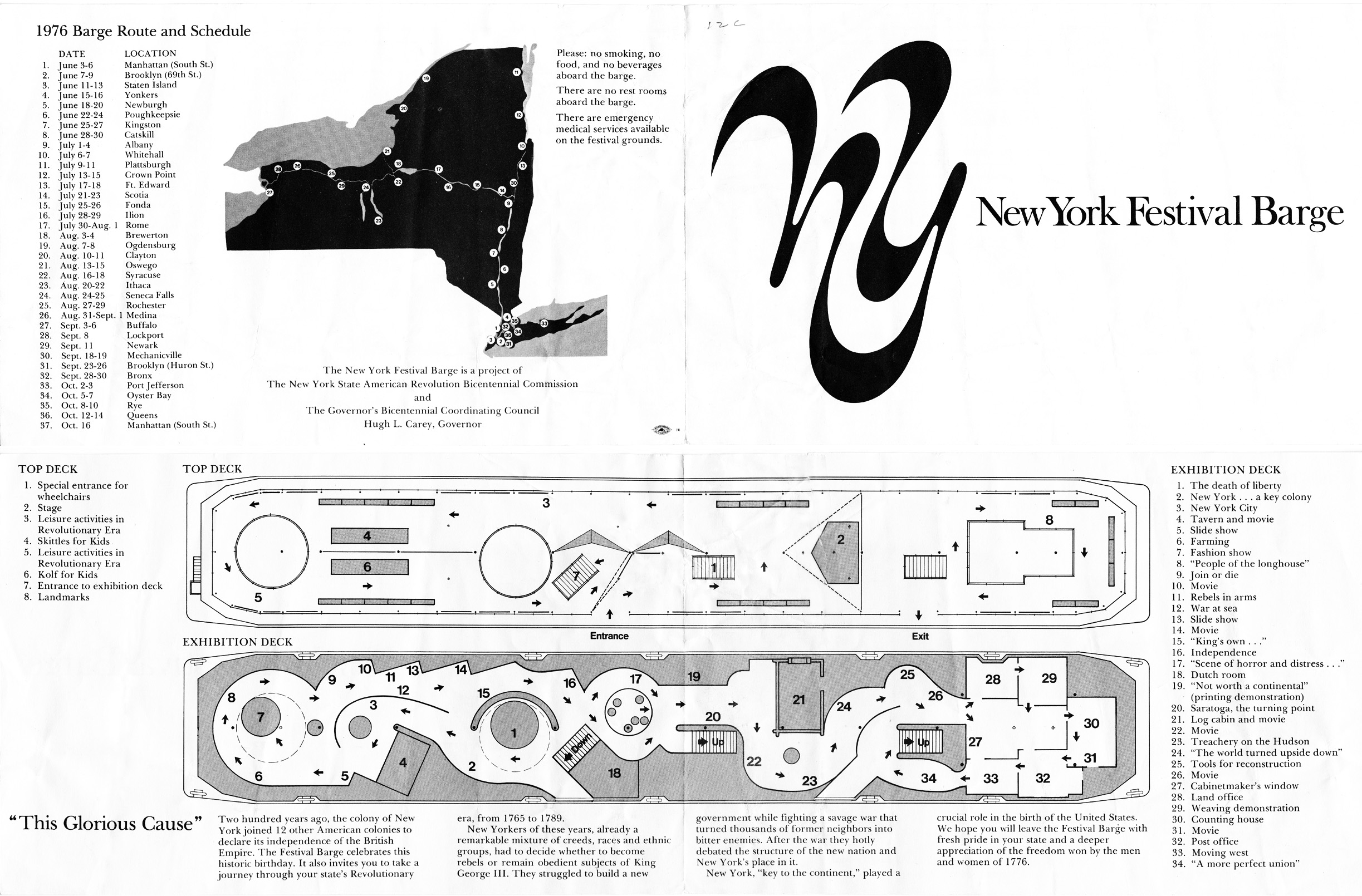
unknown | "1976 Flyer for 1976 N. Y. Festival Barge (Centennial)" |
|
1a |
Various dates |
Central N. Y. newspapers |
New Huge collection of Erie Canal items |
|
1b |
Various dates |
Central N. Y. newspapers |
Erie Canal Articles II New Another collection of Erie Canal articles. |
|
1ba |
Various dates |
Central N. Y. newspapers |
Erie Canal Articles III New A third collection of Erie Canal articles. |
|
a-1 |
2008 |
Richard Palmer, author |
'Hoggie' was a fictitious term applied to canal drivers |
|
b-1 |
1839 |
Cpt. Frederick Marryat |
Diary in America, Volume 1 Cahpter XII, by Captain Frederick Marryat. |
|
2 |
August 11, 1818 |
Rochester Telegraph |
|
3 |
August 18, 1818 |
Rochester Telegraph |
|
3-a |
April 1, 1819 |
Geneva Gazette |
|
4 |
Post War - 1812 |
Information taken from the Records of the Bureau of Marine Inspection |
Post War of 1812 Lake Ontario Merchant Ship Specifications and History |
|
4-k |
Lyons Republican |
Lyons Republican (N. Y. State) |
|
4-j |
Lyons Republican |
Lyons Republican (N. Y. State) |
|
15-j |
Lyons Advertiser |
July 19, 1822 . |
|
4-a |
October 29, 1823 |
Wayne Sentinel (Palmyra, N.Y.) . |
|
4-l |
April 21, 1824 |
Wayne Sentinel (Palmyra, N.Y.) . |
|
4-b |
July 14, 1824 |
Wayne Sentinel (Palmyra, N.Y.) . |
|
4-c |
August 4, 1824 |
Wayne Sentinel (Palmyra, N.Y.) . |
|
4-d |
June 8, 1825 |
Wayne Sentinel (Palmyra, N.Y.) . |
|
4-e |
June 28, 1825 |
Wayne Sentinel (Palmyra, N.Y.) . |
|
4-f |
June 28, 1825 |
Wayne Sentinel (Palmyra, N.Y.) . |
|
4-g |
September 6, 1825 |
Wayne Sentinel (Palmyra, N.Y.) . |
|
4-i |
August 31, 1827 |
Wayne Sentinel (Palmyra, N.Y.) . |
|
4-h |
Sept. 4, 1829 |
Wayne Sentinel (Palmyra, N.Y.) . |
|
5 |
May 6, 1847 |
Syracuse Daily Star |
|
6 |
September 13, 1847 |
Syracuse Daily Star |
|
9 |
March 1, 1866 |
Oswego Palladium |
|
7 |
May 2, 1866 |
Oswego Palladium |
|
8 |
May 3, 1866 |
Oswego Palladium |
|
8-a |
June 17, 1877 |
Memories of Early Steamboats, |
|
10 |
June 28, 1879 |
Oswego Palladium |
|
11 |
April 7, 1906 |
Oswego Daily Times |
|
CCC |
November 1, 1906 |
Rochester Democrat | "Good Season on the Canal (Lyons) |
|
13 |
August 26, 1909 |
Bolivar Breeze |
|
12 |
July 29, 1941 |
Syracuse Herald-American |
Water Navigation in New York State Before the Canals
By Richard Palmer
Long before the advent of the Erie Canal system and its successor, the Barge Canal, in New York State, there was an intricate system of natural waterways connecting the Hudson River and the Great Lakes which, according to local histories, was utilized by a variety of batteaux and Durham boats. These early trade routes date back more than 300 years.
In 1603 the French settled Montreal and soon after established trading posts throughout the Great Lakes. During the succeeding two centuries Oswego continued to be a trading and military post. During the French and Indian and Revolutionary wars a considerable trade was carried on between this point and Schenectady, from whence merchandise, baggage, etc., were forwarded in boats for different points on Lake Ontario by way of Mohawk River, Wood Creek, Oneida Lake, and the Oneida and Oswego Rivers.
The navigation of this route was difficult and embarrassed by a number of portages, where freight had to be landed and transported over land. The route between Oswego and Schenectady above traced, came under the control of "The Western Inland Lock & Navigation Co." which was incorporated in 1792. This company constructed a canal from the Mohawk River near Rome, to Wood Creek which empties into Oneida Lake. They also locked Wood Creek and built locks on the Mohawk at German Flats (Little Falls). These improvements were completed in 1799 so that the water communication was made passable for the boats used in those days.
The Western freight was drawn by teams from Albany to Schenectady and considerable quantities of furs, which constituted the staple articles of down freight, were drawn in like manner from Schenectady to Albany. At about this period the forwarding business at Oswego was conducted by Archibald Fairfield who owned and ran two small vessels on the lake, and by Messrs. Sharpe and Vaughn who owned one vessel of about 50 tons burden called "The Jane of Genesee," where she was built.
Onondaga salt formed was an important item in the commercial business of Oswego, this being its only outlet to market. Large quantities of salt manufactured near Syracuse was shipped through Oswego during this period. At about this period Messrs. E and D. Alvord of Salina contracted for the delivery of 1,000 barrels per year, for several years to a company at Meadville, Pa., at three dollars a barrel.
The salt was forwarded by Oswego to Queenston and thence by teams around Niagara Falls to Chippewa, or Street's store house two miles above, and then shipped to Erie, Pa. From there it was transported by land 14 miles to Waterford where it waited the swelling of streams from the spring run off and fall rains, where it was carried by arks to Meadville and Pittsburgh. In 1803 some 16,000 bushels of salt was manufactured at the Salina works, and 10,000 bushels in 1804. Nearly all this salt went to market through Oswego. The center and western parts of New York State at that time was a region of dense wilderness without markets, roads or means of conveyance.
In April 1802 Matthew McNair came to Oswego and engaged in the forwarding business the following year. By the late 1840s he was the oldest forwarder and one of the oldest residents of Oswego, and took pleasure in recounting the community's colorful past. On commencing the storage and forwarding business in 1803, McNair bought the schooner "Jane of Genesee," her name later being changed to "Peggy."
At this time the forwarding business in Oswego received a considerable impetus from the completion of the improvements of the Western Inland Lock & Navigation Co. Considerable quantities of merchandise came through from Schenectady in boats which navigated the Lake Ontario and carried their cargoes to Kingston, Niagara and Sackets Harbor, which had just begun to be settled. Some of the Schenectady boats traded up the Bay of Quinte, where settlements were made by people (the U.S. called "Tories," who had fled from the U.S. during the Revolutionary War.
A portion of the merchandise arrived at Oswego and was shipped by British vessels owned at Kingston, and by the North Western Fur Company, (later a branch of the Hudson's Bay Company, which date owned a fleet of schooners on Lake Ontario). Kingston, York (now Toronto), Niagara and Queenston developed as flourishing Canadian settlements, while Oswego had but six or seven families; and Genesee (also called Hanford's Landing) and Lewiston only had a few log cabins.
There was a portage at Oswego Falls (now of Fulton) and most of the merchandise was landed and carried one mile. The boats were also drawn around the falls. Sometimes the Schenectady boats were run over the falls with their cargoes intact. The sail boats were of a larger class and were always unloaded at the upper landing at Fulton, and returned to Salt Point (near Liverpool), while the salt was carted around the falls and transferred to a different class of boats at the lower landing, which ran between Oswego and Oswego Falls. McNair recalled that in 1803, some 5,000 barrels of salt was shipped from Oswego to Queenston, which was then the port to which all merchandise going around Niagara Falls was shipped. After this period there was a rapid increase in the manufacture of salt at Salina and in the forwarding business at Oswego.
In 1804, a government contractor, known only as "Mr. Wilson," a built the 90-ton schooner, "Fair American." In the fall and winter of the same year Mr. McNair built another of 50 tons, called the "Linda" and immediately after the house with which he was connected purchased a number of Canadian vessels.
Commerce was then unregulated. There were no customs regulations, and unincumbered free trade existed. No license was then required and no papers had to be certified by oath. The sharp pointed and keen scented Custom House officer had not yet appeared on the shores of the Great Lakes.
McNair built three more schooners in Oswego in 1809 and 1810. Also, the forwarding house of Bronson & Company built one, as did Porter, Barton & Company built one. These were vessels of from 80 to 100 tons burden. In 1806 Porter, Barton & Co. built a portage road round Niagara Falls (called Portage Road to this day) on the American side from Lewiston to Schlosser, thus diverting trade from the Queenston route till it was stopped by the non intercourse and embargo laws of 1808.
(1) First-hand evidence of this is early east-west trade route was found in local newspapers. The Canada Constellation, published in Niagara Falls, Ontario, reported on December 7, 1799:
"On Thursday night last a boat arrived here from Schenectady, which place she left the 22nd ult. She passed the York sticking on a rock off the Devil's Nose - no prospect of getting her off. A small deck boat lately sprang a leak twelve miles distant from Oswego; the people on board, many of whom were passengers, were taken off by a vessel passing, when she instantly sank, cargo and all lost.
"A vessel supposed to be the 'Genesee' schooner, has been two days endeavoring to come in. It is a singular misfortune, that this vessel sailed more than a month ago from Oswego, laden for this place, has been several times in fight, and driven back by heavy winds."
Further evidence of the all-water, pre-canal days is found in the Pittsburgh Statesman of Nov. 12, 1822, which illustrates how adventurous the pioneers were:
"There is now lying at the mouth of Wayne-street, in this city, a shallop rigged Keel Boat, thirty-five feet long, with several families on board, who embarked in this boat at the mouth of Wood creek, head of the Oneida Lake, state of New-York.
"The course pursued to reach Pittsburgh, was by passing down the Oneida Lake and through the Oswego river into Lake Ontario, thence up to the Niagara to within five miles of the Falls. The vessel was then carried round the Falls on wheels, and placed in the river two miles above the Falls; then pursued her course to Portland, on Lake Erie, and was again placed on wheels, and carried seven miles along a good road to the Chatauqua Lake and creek into Conewaga creek-entered the Alleghany river at Warren, Erie county, Pa. and arrived safe at Pittsburgh.
"Facts like these are worth preserving and their diffusion may be of ultimate utility. It is also a practical evidence, that a water communication between Pittsburgh and New York can be opened without difficulty."
Another early trade route was via the north-south Genesee River. Long before the Genesee Valley Canal was built, it was navigated by shallow draft vessels between Rochester and the Allegany River, or between 80 and 90 miles. At what is now the hamlet of Portageville, Durham boats and/or batteaux were carried around the formidable Genesee Falls. But the Genesee River was only one of many natural streams used. Only the most artificial improvements such as crude dams were built to create what was called "slack water navigation." There was considerable forwarding of flour by long, shallow draft Durham boats. The primitive land and water systems of the day were slow, rough going, dangerous and expensive, especially in the low water times of summer. Products shipped over this route included potash, flour, lumber and bricks.
(2) In most cases rivers and tributaries in upstate New York were only navigable during periods of high water resulting from spring run off. Other rivers besides the ancient Oneida/Oswego trade route included the Canisteo, Cohocton, Delaware, Mohawk, Seneca, Susquehanna, Tioughnioga, and various tributaries.
There are also many references to batteaux and similar small boats (later, steamboats) being employed on the Finger Lakes.
Later, there were efforts to improve the natural waterways, but with few tangible results. As the country became thickly settled, dams and fish weirs were built which destroyed the use of rivers and streams as water highways. In some cases, however, sluiceways were built to allow the passage of boats.
Steam Boat Ontario
Rochester Telegraph, Aug. 11, 1818
Steam Boat Ontario. - This fine boat continues to ply most successfully between Ogdensburg and Lewiston. It is well fitted up, and notwithstanding the unfortunate accident that occurred early in the session and the many prejudicial and unfounded reports propagated, receives very liberal patronage and rides the lake with perfect ease and safety.
The Steam-boat comes within two miles of this village and the passengers generally improve the opportunity to visit it. If an admirer of the works of industry and enterprise, what can more completely excite the admiration of the traveller, than to reflect, that but three or four years since a wilderness only could afford him shelter, where now populous villages greet his eyes and offer him welcome.
And if a lover of the curiosities of nature, he may here find ample subjects on which to bestow his admiration: - the Falls, three in number, the largest ninety-six feet, and a series of views, alternately of the picturesque and sublime, seldom surpassed do not fail to excite attention.
This route is now rapidly becoming the fashionable one for parties of pleasure to the falls of Niagara, and no part of our country abounds in grander and more variegated view. Rochester Gazette
Ship News.
Port of Genesee
Arrived:
Aug. 10 - Sloop Arcadia, Merrit, Niagara.
11 - Sch. Jackson, Stoneburner, Cape Vincent.
12 - Steam Boat Ontario, Lusher, Sacket's Harbor.
13 - Sch. Ackford, Eaton, Niagara.
Sch. Betsey, Montague, Oswego.
15 - President, Larabee, Youngstown.
Steam Boat Ontario, Lusher, Sodus and Pultneyville.
She was within 4 miles of Niagara, in the gale on the 13th, and at night put before the wind and run down the Lake as far Sodus, by the next morning.
____
Sailed:
10 - Sch. Defiance, Stoneman, Kingston.
11 - Clarissa, York, French Creek.
12 - Appollonia, Knapp, Sacket's Harbor; Union, Eno, Sodus;
Kingston Packet, Johnson, Oswego; Steam Boat Ontario, Lusher, Niagara.
13 - Ackford, Eaton, Ogdensburg; Betsey, Montague, Niagara .
15 - Mary, Briggs, French Creek; Jackson, Stoneburner, French Creek.
Certificates of Enrollment issued at Sackets Harbor, New York
Certificates of Enrollment issued at the District of Cape Vincent, New York
Certificates of Enrollment issued at Genesee, Pultneyville and Rochester, New York
Master Abstracts of Enrollments issued at Lower Great Lakes Ports, 1815-1911
Master Abstracts of Registers for Great Lakes Ports, 1815-1910
Microfilms at Penfield Library, SUNY/Oswego.
Adjutant Clitz Built 1808 @ Oswego as Oneida, schooner, one deck, two masts, square stern, no figurehead
L 87' 10", B 24' D 7' 11", 146.82 tons
Registered 28 May 1826 #4 @ Sacket's Harbor, Robert Hugunin owner & master
Registered 17 August 1826 #6 @ Cape Vincent
Registered 1 May 1827 #2 @ Sacket's Harbor
Enrolled 1 May 1827 @ Sacket's Harbor, Jesse Smith (Henderson merchant),
Shubel Wescott Formel (Sacket's Harbor), owners; Robert Hugunin, master
Registration surrendered 24 April 1829 @ Sacket's Harbor
Enrolled 24 April 1829 #3 @ Sacket's Harbor
Enrolled 21 April 1830 #6 @ Sacket's Harbor
Enrolled 4 June 1831 #3 @ Sacket's Harbor, change: L 90' B 25' D 10' 202.40 tons
Enrollment surrendered 8 August 1832
Enrolled 8 August 1833 #9 @ Sacket's Harbor, 202.40 tons.
Appelona Built 1814 @ Henderson, schooner, one deck, two masts, square stern, no figurehead
L 45', B 15', D 5' 3", 37.38 tons
Enrolled 20 May 1818 #7 @ Sacket's Harbor.
Arcadia Built 1817 @ Sacket's Harbor, sloop, one deck, one mast, square stern, no figurehead
L 55' 6", B 18' 5", D 5' 3", 45.27 tons
Enrolled 29 September 1817 #4 @ Sacket's Harbor.
Bethiah Built 1815 @ Genesee, schooner, one deck, two masts, square stern, no figurehead
L 56', B 12' 10", D 4' 1", 36.62 tons
Enrolled 14 June 1819 #14 @ Sacket's Harbor.
Black Bird Built 1819 @ Oswego, schooner, one deck, two masts, square stern, no figurehead
L 56', B 13' 8", D 3' 9", 26 tons
Enrolled 5 December 1819 #37 @ Sacket's Harbor.
Charles & Ann 99 tons
Enrolled 12 June 1815 #4 @ Oswego
Enrollment surrendered 9 November 1815 @ Oswego.
Commodore Perry Built 1815 @ Sandy Creek, schooner, one deck, two masts, square stern, no figurehead
L 62', B 13', D 4' 2", 31.07 tons
Enrolled 7 June 1819 #12 @ Sacket's Harbor.
Eckford Captured at York 27 April 1813 as Duke of Gloucester, schooner, one deck, two masts, square stern, no figurehead
L 67', B 18', D 10' 3", 109.23 tons
Enrolled 16 August 1816 #8 at Sacket's Harbor, M. T. Woolsey, owner; Samuel Dixon, master
Enrollment surrendered 17 August 1816 @ Sacket's Harbor
Enrolled 7 October 1817 #6 @ Sacket's Harbor, M. T. Woolsey, owner
Enrolled 16 April 1818 #2 @ Sacket's Harbor, M. T. Woolsey & Frederick White (Sacket's Harbor merchant), owners
Enrolled 13 April 1819 #2 @ Sacket's Harbor, Frederick White, owner
Enrolled 16 April 1823 @ Sacket's Harbor, change: D 7' 3", 77.20 tons
Enrollment surrendered 14 August, 1824 @ Sacket's Harbor.
Ellen Built 1814 @ Sacket's Harbor, schooner, one deck, two masts, square stern, no figurehead
L 75' 4", B 16' 7", D 3' 10", 43.70 tons
Enrolled 17 October 1826 #21, Robert Hugunin (Sacket's Harbor mariner), owner.
Fair American 82.54 tons
Enrolled 10 August 1815 #6 @ Oswego
Enrollment surrendered 23 April 1816 @ Oswego.
Farmers Daughter Built 1816 @ Sandy Creek, schooner, one deck, two masts, square stern, no figurehead
L 58' 6", B 15' 6", D 4' 7", 39.48 tons
Enrolled 7 May 1812 #2 at Sacket's Harbor, William Vaughan (merchant) & Nathan Wentworth (farmer), owners; Peter Ingalls master.
General Brady 302.02 tons
Registered 21 May 1827 #6 @ Sacket's Harbor, Robert Hugunin owner & master
Registration reissued (original lost) 24 May 1828 @ Sacket's Harbor
Registration surrendered 14 April 1829(?) @ Oswego.
Genesee Packet 83.05 tons
Enrolled 24 July 1818 #1 @ Ogdensburg
Java Built 1816 @ Oswego, schooner, one deck, two masts, square stern, no figurehead
L 57' 10", B 15' 10", D 4' 7", 34.72 tons
Enrolled 26 May 1821 #9 @ Genesee.
John Built 1818 @ Ellisburg, schooner, one deck, two masts, square stern, no figurehead
L 56' 6", B 16', D 5' 4", 39.56 tons
Enrolled 16 October 1823 @ Sacket's Harbor.
Julia Built 1811 @ Oswego, schooner, one deck, two masts, square stern, no figurehead
L 64', B 17' 10", D 10' 7", 62.85 tons
Enrolled 10 July 1817 #6 @ Oswego, 47.66 tons
Enrolled 17 April 1818 #3 @ Sacket's Harbor, David Whiting owner; James Chapman, master
Enrolled 22 October 1827 @ Genesee, changes: George C. Latta, owner,
L 6?', B 16' 10", D 6' 7", 64.05 tons
Enrollment surrendered 3 June 1828, vessel altered & register issued
Enrolled 24 July 1828 @ Genesee, changes: L 64', B 16' 10", D ?, 47.34 tons
Enrollment surrendered 8 July 1829.
Lady of the Lake Schooner
49.43 tons
Registered 30 September 1826 #2 @ Sacket's Harbor, John Rogers, owner & master
Enrolled 30 September 1826 @ Sacket's Harbor
Temporary enrollment 5 October 1826 @ Sacket's Harbor, John Rogers, owner &
master
Registration surrendered 6 October, 1826 @ Sacket's Harbor.
Lady Washington Built 1816 @ Sacket's Harbor, schooner, one deck, two masts, square stern, no figurehead
L 60', B 18', D 5' 4", 49.73 tons
Enrolled 15 October 1817 #7 @ Sacket's Harbor.
Levantia Built 1815 @ Genesee, schooner, one deck, two masts, square stern, no figurehead
L 53' 9", B 12' 11", D 4' 1", 25.51 tons
Enrolled 2 December 1818 #31 @ Sacket's Harbor.
Mary Built 1816 @ Sodus, schooner, one deck, two masts, square stern, no figurehead
L 60' 2", B 18' 7", D 5' 8", 54.72 tons
Enrolled 19 June 1821 @ Genesee.
Monroe Built 1817 @ Sacket's Harbor, schooner, one deck, two masts, square stern, no figurehead
L 62' 9", B 12', D 4' 1", 28.63 tons
Enrolled 26 April 1819 #6 @ Sacket's Harbor.
Northern Trader Built 1815 @ Sacket's Harbor, schooner, one deck, two masts, pink stern, no figurehead
L 58' 10", B 12', D 3' 10", 25.02 tons
Enrolled 23 July 1816 #5 at Sacket's Harbor, Leonard Denison, owner; George Rounds, master.
Olive Branch Built 1816 @ Henderson, schooner, one deck, two masts, square stern, no figurehead
L 53' 10", B 11' 10", D 3' 5", 20.25 tons
Enrolled 6 June 1820 #12 @ Sacket's Harbor.
Ontario Built 1810 @ Lewiston, schooner, one deck, two masts, square stern, no figurehead
L 65', B 19' 6", D 8', 87.54 tons
Ontario Built 1816-1817 @ Sacket's Harbor, schooner rigged steam boat, one deck, two masts
L 112', B 28', D 8' 3", 231.57 tons
Enrolled 11 April 1817 #1 at Sacket's Harbor, Hunter Crane, Samuel F. Hooker
(Sacket's Harbor merchants), Elisha Camp (Sacket's Harbor attorney), Capt.
M. T. Woolsey, Eri Lusher (Schenectady merchant), Charles Smith (Albany
merchant), Purser William M. Sands, Gen. Jacob Brown, owners; Francis
Mallaby, master.
Phenix Built 1814 @ Sacket's Harbor, schooner, one deck, two masts, square stern, no figurehead
L 78' 1", B 16' 3", D 4' 5", 48.67 tons
Enrolled 4 September 1826 @ Sacket's Harbor.
Phenix Built 1816 @ Sacket's Harbor, schooner, one deck, two masts, square stern, no figurehead
L 65' B 11' 4" D 3' 11" 26.85 tons
Enrolled 1 October 1818 #23 @ Sacket's Harbor.
Plow Boy Built 1816 @ Genesee, schooner, one deck, two masts, square stern, no figurehead
L 58' B 16' D 3' 7", 29.25 tons
Enrolled 27 April 1821 #6 @ Genesee.
Sachem Built 1816 @ Henderson, schooner, one deck, two masts, square stern, no figurehead
L 62' 5", B 21' 6", D 6' 7", 73.83 tons
Enrolled 12 May 1818 #6 @ Sacket's Harbor.
Sandy Creek Built 1816 @ Ellisburg, schooner, one deck, two masts, square stern, no figurehead
L 54' 6", B 14', D 3' 9", 25 tons
Enrolled 14 November 1821 #16 @ Genesee.
Sophia Built 1815 @ Sacket's Harbor, open boat, no deck, one mast
L 50', B 11' 9", D 3" 4", 17.16 tons
Enrolled 2 May 1816 @ Sacket's Harbor, Samuel Dixon & William Vaughan, owners; Samuel Dixon, master.
Teazer Built 1814 @ Sacket's Harbor, schooner, one deck, two masts, square stern, no figurehead
L 57' 6", B 15', D 5', 38.77 tons
Enrolled 23 May 1816 @ Sacket's Harbor, Luther Reed owner & master
Enrolled 8 June 1819 #13 @ Sacket's Harbor.
Triumph Built 1816 @ Sacket's Harbor, schooner, one deck, two masts, square stern, no figurehead
L 59' 6", B 12', D 3' 10", 25.32 tons
Enrolled 1 June 1819 #10 @ Sacket's Harbor.
Wolcott Built 1817(?) @ Sacket's Harbor, schooner, one deck, two masts, square stern, no figurehead
L 59' 6", B 18', D 5' 10", 53.85 tons
Enrolled 4 September 1819 #28 @ Sacket's Harbor.
Woolsey Built 1815 @ Sacket's Harbor, schooner, one deck, two masts, square stern, no figurehead
L 58' 6", B 17' 3", D 6' 6", 57.45 tons
Enrolled 27 June 1816 #4 @ Sacket's Harbor, Henry Tubout & Benjamin Smith (ship carpenters), owners; James Chapman, master.
Woolsey Built 1817 @ Sacket's Harbor, schooner, one deck, two masts, square stern, no figurehead
L 55' B 17' 6" D 5' 6" 45.08 tons
Enrolled 31 August 1818 #19 @ Sacket's Harbor.
__________________________________________________________________________________________
Steamboat "Ontario" of Sacket's Harbor
Syracuse Daily Star, Sept. 13, 1847
Steamers on Lake Ontario
From an article in the Oswego Times, it appears that the first steamboat on Lake Ontario was built at Sacket’s Harbor in 1816, and commenced running in the Spring of 1817. She was called the Ontario, and was the first steamer built on the Western Lakes, and ran from Ogdensburgh to Lewiston, making the trip in 10 days, charging $15 for cabin passage, and continued to run until the year 1831.
Her engine, says the Times, was made by Mr. J. P. Allaire, of the city of New York. Gen. Jacob Brown, Com. M. T. Woolsey, Hooker & Crane, Charles Smyth, Erie Lusher and Elisha Camp were the proprietors of the Ontario. Her construction as the first vessel propelled by steam built west of the Hudson, and the first sea vessel of the kind we believe ever built in this country, was considered an experiment and an enterprise, at the time, of the first magnitude.
She left Sacket’s Harbor early in the spring of 1817 on her first trip, and reached Oswego the same day where she was received by the people with extravagant demonstrations; such as the firing of cannon and most enthusiastic greetings. Many of the people of Oswego continued their rejoicings all night and till the boat left the next day. It was a wonderful occasion, one that commanded the admiration and engrossed the attention of the people.
On the morning of the second day of her trip the Ontario left Oswego and reached Genesee River in the evening, where she remained till the next day, when she proceeded on her way up the Lake. Soon after leaving the river, she encountered a northeast blow which raised a considerable sea. Like all steamers previously built, her shaft on which the wheels revolved was confined to the boxes by which it ran by its own weight only. The action of the sea upon her wheels soon lifted the shaft from its bed, so that the wheel houses were instantly torn to pieces, utterly demolished by the wheels with a tremendous crash, doing considerable damage to the wheels. Upon this disaster, the steamer put about and with the aid of canvas returned to Sacket’s Harbor to repair damages and secure her shaft.
Correspondence of the Star Rochester May 4
After a tempestuous voyage, (arriving at 10 1/2 p.m., last night,) we were safely landed in this flourishing city-deeply regretting that were so soon to part with Captain Wheeler and the Boston. Nothing adds more to the pleasure of a traveler than an agreeable, polite and attentive commander, and a well regulated, fast sailing boat. These various qualities are all concentrated in Captain Wheeler and the Boston. The popularity of either I find, is not confined to Syracuse, or any particular place; but encomiums are lavished upon them by persons from all parts of the State, who seek the canal packets for the purpose of quiet and enjoyment. The tables of the Boston are furnished with all that the epicure could desire; and the cleanliness and attention exhibited by every thing and all persons connected with the boat, cannot but make one feel himself "perfectly at home." To use a printer’s phrase the trip from Syracuse to Rochester, was one of the fastest takes I have had for some time--and my only regret is, that was not longer. Suffice it to say if you wish to "kill time" agreeably, step on board of the Boston, and entrust yourself to Capt. Wheeler.
A pleasant evening
After midnight had drawn her dark mantle over the denizens of this lower world, the passengers (about thirty in number) retired to the cabin, and discussed matters and things past, present, and to come;
and to make the evening pass pleasantly, the ladies-always on hand--made Boston resound with their sweet; angelic voices as she glided along the majestic Erie, the rippling of those waters, commingled
with the vocal music is the cabin, made the hours fly away with telegraphic speed. Time alone can efface the recollections of Sunday evening, as being one of the most agreeable it was ever my lot to spend.
Montezuma Marsh
To pass through this place at any time, has always been represented as tedious and unpleasant; but to me it was the very reverse of these. I was deeply interested in the forbidding appearance of the place, and my curiosity was more than compensated in listening to the unnumberable songsters of the woods who at early dawn made the welkin ring with their melodious notes. So thick, in deed were the blackbirds that with a bow and arrow you might have strung a dozen or more at a shot! If I should never visit the Halls of Montezuma, I have accomplished more than General Taylor has yet done-- I have been through the marsh of Montezuma.
The Wheat Crop &c.
From all the information I can gather, the late cold weather will not affect the wheat crop, and farmers assure me that the prospect for a large yield of fruit of all kinds was never better.
The Canal Business &c.
I remarked in the beginning, that my voyage was "tempestuous", which was rendered by the small quantity of water on some of the level, and countless number of boats going east and west. So low indeed, was the water between this place and Palmyra ,that several boats loaded with flour &c. in making a passage way for the Boston, were ran aground with no prospect of a speedy release.
The canal in and about Rochester prevents the appearance of a moveable warehouse and all is activity and bustle. The tolls collected at this place up to 6 p.m. on Monday amounted to $11,659.07. There have been (cleared) up to the same time, 76,674 barrels of flour, 800 bushels of barley, and 3,575 bushels of corn.
New Canal Boats
Oswego Palladium, Wed., May 2, 1866
- One of the finest boats ever built in this vicinity, was lately launched from the yard of Messrs. Scott and Nesbit, near the new weigh lock. She was built for, and is owned by Messrs. Chester and Andrew Penfield, and will be commanded by the latter. She is a first class lakes (sic), beautifully modeled, sound as a nut, and an honor to the builders. She is 97 feet long, 18 feet wide and 9 feet 2 inches hold. She will carry 10,000 bushels of corn or 7,600 bushels of wheat. The new boat is named George A. Bennett, and we don’t know that she could have a better one. The "George A." is loaded with corn, and cleared for New York this morning.
Messrs. S. Miller and Co. yesterday launched a fine first-class laker of the largest size from their yard, for the Old Oswego Line. They will launch another for the same line next week. There are a number of new boats building and old one rebuilding at this yard, which seems to be doing a driving business just now.
The New Weigh Lock
Oswego Palladium - Tuesday May 3, 1866
We yesterday visited the new Weigh Lock on the Oswego Canal, and found it to be in every way a good institution. It is a solid and substantial work, the masonry being of the most approved character. The scale is a new one, and possesses many improvements. The lock is now being lined, and will be ready for use about Monday next. The Office building is of brick, large and commodious with all modern conveniences.
WEBHOST NOTE: A note, dated May 10, 2006, from Nat Siembor, Historical Research Services of Oswego, N. Y. follows:
Hi folks! As a further note, the date stone for the weigh lock building described in one of the articles below (he is referring to the above article - by sitehost) is now in the collection of the H. Lee White Marine Museum, in Oswego. The stone is marble, and in a roughly pentagonal shape, about 3.5" thick, and in two pieces-- already broken when donated to the museum by the finder. The full text of it reads:
"Erected/1865/Ben J.F. Bruch/Canal Commissioner."
In photos of the weighlock building in collection at the Oswego County Historical Society, the date stone is clearly shown above the main door.
The Canal Commissioners Report
Oswego Palladium, March 1,1866
This report is received and we extract the following on the Oswego Canal.
This canal suffered greater damaged in consequence of the freshet of March last, than any other upon the middle division. Upon section No. 1, that portion passing along the northern borders of Onondaga lake for a distance of five miles, the towing path was for much of the distance seriously damaged and the protection wall on the lake side of the bank had to be relaid throughout nearly its entire length. From Mud lock to Three River Point, the channel is in Seneca river. The towing path was inundated for some time, and as the result the lining upon its surface was for the most part washed away, and required replacing. The sluices and bridges in the towing path were mostly rendered useless all of which have been repaired or rebuilt.
The repairs or the damage caused by the freshet upon section No. 2 were made by the Superintendent of repairs (the contractor, Chase E. Case, having abandoned this contract after the extent of damage became known.)
In his report to the Commissioner, Engineer, Kimbal writes: "No such water has ever before been known. In rebuilding the locks of this canal, as well as the enlargement of the section work, great pains were taken to find the high water mark, and arrange the new work accordingly-- but this high water shows that the "oldest inhabitant" was not found, as new works, that were supposed to be secure have found themselves "baptized" even to "immersion." On the river level above Fulton, an old inhabitant who has kept a measurement for the past forty years, puts the water of last spring seventeen and a half inches the highest."
The work upon the Phoenix dam has progressed throughout the season, and is now about three fourths completed, and preparations are making that will insure its completion early the coming season. The dams at Oswego Falls, Braddock’s Rapid and Minette (sic), have so often been reported unsafe for the maintenance of canal navigation that a repetition seems uncalled for, but is earnestly recommended that immediate steps be taken to rebuild all of the above dams of stone, that the navigation of Oswego canal may not be exposed to a recurrence of the experience of last spring, caused by the failure of High Dam the rebuilding of which has been recommended each year for the last eight years, but omission to do so, resulted in the most disastrous break known in the history of the canals of this state.
The weigh lock at Oswego will be completed by the opening of navigation next season.
Old Zack. Barnes.
Death of the Most Notable Man in the Early History of Boating on the Erie - The Murderer of Van Schaik and His Eventful Life.
Zachariah Barnes died in Forestport, Oneida county, a few days ago, aged about 67 years. Zack. Barnes was one of the earliest and most noted boatmen on the Erie Canal, when life on the Erie Canal was one of adventure and hard knocks.
Our townsman, Chester Penfield, contributes the following history of Barnes, which involves also some interesting reminiscences of early boating on the Erie:
The death of Zachariah Barnes, when it came to the notice of the writer, revived old recollections, the earliest of which was in the year 1832 in the town of Westmoreland, Oneida county, in a place called Spencer Settlement, three miles southeast from Rome - a place where a large number of boatmen lived.
In this place lived Zachariah Barnes and boarded with his brother, James, a farmer. Zack, as he was called, followed the canal summers and boarded with his brother winters. He was a powerful man physically, standing 6 feet 4 inches tall, with broad chest, small waist, long arms and a wonderful ability to use his feet for self defense, leaving very little for his hands to do in a fight.
It was noted that he would stand very close to a man when in an altercation and with the utmost ease kick him in the face. As fighting was a common practice in the early history of the Erie Canal, he became noted among boatmen as the champion. Zack had accumulated a little competence by saving and industry, and bought a small farm. He was temperate in his habits and had formed the acquaintance of a respectable young lady and was expecting after the close of the canal in the fall of 1834 to be married; but an evil spirit brooded over his destiny in a fight with a man named Daniel Van Schaik of New London, Oneida county. He killed Van Schaik and went to Rome and surrendered himself to the sheriff.
He was tried for murder and defended by Joshua Spencer and Henry A. Foster; was convicted of manslaughter in he third degree and was fined $1,000, which his brother paid for him, taking the farm. This event changed the whole history of this man.
The young lady refused to marry him, and remained single, but died a few years later with a broken heart. Barnes took to drink and tried to drown the recollection of the Rome swamp tragedy. Following the canal for several years, with an increasing appetite for drink, he became at last incapable of following the occupation of inland navigator, had to leave the canal, and at last yielded to the king of terrors.
Such is a brief outline of a character who was widely known among the old boatmen and old citizens of Oneida county. The numerous incidents of his erratic career are well known to old boatmen that it would be useless to recount them; but one showing his prominent trait of kindness to the poor, may be mentioned.
He was a strong wrestler, and on one occasion he desired to assist a poor widow to buy a cow. So he accepted a challenge to wrestle the champion in that section for $25, the stakes, if won, to be given to the poor woman to buy a cow. He won the match, dislocating his opponent's ankle. The stakeholder bought the poor woman a cow and barrel of flour with the money.
Zack never married, having sworn a vow after the Van Schaik murder and the result it had on his engagement with the young woman, that he would never marry, and which he kept. He was for many years the notable figure among Erie Canal boatmen, who in spite of his failings, will be sorry to hear that he is dead.
'Hoggie' was a fictitious term applied to canal drivers
By Richard Palmer
Long before the passage of child labor laws in this country, young people put in long and toilsome hours working in factories, on farms, and in other pursuits.
In the 19th century, literally thousands of boys - some as young as 10 or 12 years of age - spent the early years of their lives working 12 hour shifts driving mules on the Erie Canal. These boys were traditionally called "hoggies." They received only between $8 and $10 a month and were frequently cheated out of that by a dishonest captain who took advantage of them.
Frequently, it is difficult to separate fact from folklore. The term "hoggie" (spelled different ways) seems to more associated with the latter and appears to have come from the imaginations of authors over the years to romanticize canal history. This is because literature contemporary of the times does not use the term. These workers are referred to as "drivers" or "driver boys."
The late Richard N. Wright of Syracuse, one of the founders of the New York State Canal Society and long-time director of the Onondaga Historical Association, dismissed such terms as rubbish concocted by authors to sell books. He said what they didn't know they made up - including Samuel Hopkins Adams, Lionel D. Wyld and Marvin Rapp. More than once, Wright told the author of this article that the problem with many of these books was "they are more fiction than fact" and these fabrications are perpetuated by future authors as the truth.The fact still remains, however, that such a class of young people once existed on the canal, and the following articles are definite proof.
The Oswego Daily Palladium of April 18, 1851 carried this interesting article on the subject. Notice there is no reference to the slang term, "hoggie" and that there is also no reference to mules:
"The opening of canal navigation has brought a large number of boatmen and canal drivers into the city in search of employment, and horses, the motive power on this branch of inland commerce, are again called into active requisition along the line of this great thoroughfare.
"Where all the canal boys come from is a mystery. In the fall when the great 'Clinton ditch' closes down as tight as a drum, they are thrown out of employment, and disappear during the long winter. But in the spring, they swarm like bees - though unlike these busy insects, they are not noted for their industrious habits.
"They are readily distinguished from other boys, for there is something peculiar in the deportment of the chevaliers of the tow-path that makes them different from any other class of boys. They are, in fact, a community by themselves - avoided and despised by their fellow youth.
"But after all the ridicule and abuse to which they are subjected, these poor canallers are a useful and necessary class of people, and are, on the whole, about as moral as could be expected from the nature of their occupation, and the demoralizing influences thrown around them.
"Their moral destitution should rather excite our commiseration and sympathy than our contempt, and we rejoice to hear that well-directed efforts are being made in the western cities to improve their condition."
The Utica Daily Observer of Aug. 7, 1858 carried what is known in journalism as a "house ad."
"Missionaries Wanted - To look after the Canal boys that assemble at a corner on Corn Hill every Sunday. The unfortunate fellows do not seem to have any homes at which to stay, so they lie around in the street to the great annoyance of church goers."
(From the Troy Whig of Jan. 10, 1873):
"A young lad, poorly clad in a starving condition, wondered into the first precinct station house yesterday afternoon in search of something to eat and a place to rest his weary frame. Captain Quigley interrogated the unfortunate stranger, and gleaned the following facts in regard to his past life and adventures. The lad is seventeen years of age and his name is Wolcott Tier. Two years ago he lived happily at his home in Oswego, but his father died and his mother married a man by the name of Andrew View. His stepfather had no sooner taken possession of the house than he laid all kinds of plans to get rid of the boy.
"For scarcely any cause whatever, he would whip him, notwithstanding the earnest protestations of the mother, who was also abused by him for interfering in her son's behalf. He stood the treatment for two months and then resolved to leave the house and earn a living at some other place. He informed his stepfather of his intentions and the latter encouraged his resolution and told him never to enter the house again. He accordingly left one cold night in December, 1871, after bidding his broken hearted mother farewell, promising her he would return sometime, in better circumstances. But his expectations have not been realized, as his career since that time has been attended with a series of misfortunes.
"He first went to Syracuse where he worked until the canal opened, then obtaining a position as driver he remained on the tow path until he became tired of the drudgery of his vocation knowing well that he was capable of better work.
"Finally he concluded that he would return once more to his home. His mother entreated her husband to let him remain, as he promised to use every endeavor to make himself useful in the future, but her appeal was in vain. He stayed in Oswego for some time and was often in sight of his mother's house, but never after that time did he enter it.
"When the canal was opened last spring, necessity, not choice, compelled him to return again, as driver for a canal boat. He procured a position in that capacity on the boat "A.D. Hoyt," and was promised $15 a month and his board. The captain, however, took advantage of his condition, and only at times could he obtain money, and then in small quantities.
"The summer passed and his boat was among the last that came down the Erie Canal from Buffalo. On reaching New York the captain decamped and the employees, Tier among the rest, were left in a strange city without a cent. He has managed, since that time, barely to keep himself alive, and yesterday arrived in Troy exhausted and discouraged.
"Captain Quigley kindly gave him a place to sleep and afterward had him taken to the county house. He is willing to work, but ever since he left home, which now has a 'serpent on the hearth,' he has again running against the stream until at last he has been obliged to give up."
The Oswego Daily Palladium of April 18, 1851 carried this interesting article on the subject. Notice there is no reference to the slang term, "hoggie" and that there is also no reference to mules:
"The opening of canal navigation has brought a large number of boatmen and canal drivers into the city in search of employment, and horses, the motive power on this branch of inland commerce, are again called into active requisition along the line of this great thoroughfare.
"Where all the canal boys come from is a mystery. In the fall when the great 'Clinton ditch' closes down as tight as a drum, they are thrown out of employment, and disappear during the long winter. But in the spring, they swarm like bees - though unlike these busy insects, they are not noted for their industrious habits.
"They are readily distinguished from other boys, for there is something peculiar in the deportment of the chevaliers of the tow-path that makes them different from any other class of boys. They are, in fact, a community by themselves - avoided and despised by their fellow youth.
"But after all the ridicule and abuse to which they are subjected, these poor canallers are a useful and necessary class of people, and are, on the whole, about as moral as could be expected from the nature of their occupation, and the demoralizing influences thrown around them.
"Their moral destitution should rather excite our commiseration and sympathy than our contempt, and we rejoice to hear that well-directed efforts are being made in the western cities to improve their condition."
Yet, not all were lost. Many of these boys later became boat captains, businessmen, and useful members of society.
Note: A photo was included with the above article, the caption of which read: “Young drivers on the Erie Canal in the early 1900s. It was not unusual for them to walk up to 30 miles a day.” Unfortunately, the photo cannot be used on this website due to space problems.
Diary in America, by Captain Frederick Marryat.
Published in 1839 by Longman, Orme, Brown, Green & Longmans.
Vol. 1 Chapter XII
Set off for Oswego in a canal boat; it was called a packet-boat because it did not carry merchandise, but was a very small affair, about fifty feet long by eight wide. The captain of her was, however, in his own opinion, no small affair; he puffed and swelled until he looked larger than his boat. This personage, as soon as we were under weigh, sat down in the narrow cabin, before a small table; sent for this writing-desk, which was about the size of street organ, and, like himself, no small affair; ordered a bell to be rung in our ears to summon the passengers; and, then, taking down the names of four or five people, received the enormous sum of ten dollars passage-money. He then locked his desk with a key large enough for a street-door, ordered his steward to remove it, and went on deck to walk just three feet and return again. After all, there is nothing like being a captain.
Although many of the boats are laid up, there is still considerable traffic on this canal. We passed Rome, a village of two thousand inhabitants, at which number it has for many years been nearly stationary. This branch of the canal is, of course, cut through the levels, and we passed through swamps and wild forests; here and there some few acres were cleared, and a log-house was erected, looking very solitary and forlorn, surrounded by the stumps of the trees which had been felled, and which now lay corded up on the banks of the canal, ready to be disposed of. Wild and dreary as the country is, the mass of forest is gradually receding, and occasionally some solitary tree is left standing, throwing out its wide arms, and appearing as if in lamentation at its separation from its companions, with whom for centuries it had been in close fellowship.
Extremes meet: as I looked down from the roof of the boat upon the giants of the forest, which had for so many centuries reared their heads undisturbed, but now lay prostrate before civilisation, the same feelings were conjured up in my mind as when I have, in my wanderings, surveyed such fragments of dismembered empires as the ruins of Carthage or of Rome. There the reign of Art was over, and Nature had resumed her sway.. here Nature was deposed, and about to resign her throne to the usurper Art. By the bye, the mosquitoes of this district have reaped some benefit from the cutting of the canal here. Before these impervious forest retreats were thus pierced, they could not have tasted human blood; for ages it must have been unknown to them, even by tradition; and if they taxed all other boats on the canal as they did, ours, a canal share with them must be considerably above par, and highly profitable.
At five o’clock we arrived at Syracuse. I do detest these old names vamped up. Why do not the Americans take the Indian names? They need not be so very scrupulous about it; they have robbed the Indians of everything else.
After you pass Syracuse, the country wears a more populous and inviting appearance. Salina is a village built upon a salt spring, which has the greatest flow of water yet known, and this salt spring is the cause of the improved appearance of the country; the banks of the canal, for three miles, are lined with buildings for the boiling down of the salt water, which is supplied by a double row of wooden pipes. Boats are constantly employed up and down the canal, transporting wood for the supply of the furnaces. It is calculated that two hundred thousand cord of wood are required every year for the present produce; and as they estimate upon an average about sixty cord of wood per acre in these parts, those salt works are the means of yearly clearing away upwards of three thousand acres of land. Two million of bushels of salt are boiled down every year: it is packed in barrels, and transported by the canals and lakes to Canada, Michigan, Chicago, and the far West. When we reflect upon the number of people employed in the manufactories, and in cutting wood, and making barrels, and engaged on the lakes and canals in transporting the produce so many thousand miles, we must admire the spring to industry which has been created by this little, but bounteous, spring presented by nature.
The first sixty miles of this canal (I get on very slow with my description, but canal travelling is very slow), which is through a flat swampy forest, is without a lock; but after you pass Syracuse, you have to descend by locks to the Oswego river, and the same at every rapid of the river; in all, there is a fall of one hundred and sixty feet. Simple as locks are, I could not help reverting to the wild rapids at Trenton Falls, and reflecting upon how the ingenuity of man had so easily been able to overcome and control Nature! The locks did not detain us longÑthey never lose time in America. When the boat had entered the lock, and the gate was closed upon her, the water was let off with a rapidity which considerably affected her level, and her bows pointed downwards. I timed one lock with a fall of fifteen feet. From the time the gate was closed behind us until the lower one was opened for our egress, was exactly one minute and a quarter; and the boat sank down in the lock so rapidly as to give you the idea that she was scuttled and sinking.
The country round the Oswego is fertile and beautiful, and the river, with its islands, falls, and rapids, very picturesque. At one p.m. we arrived at the town of Oswego, on Lake Ontario; I was pleased with the journey, although, what with ducking to bridges, bites from mosquitoes, and the constant blowing of their unearthly horn with only one note, and which one must have been borrowed from the gamut of the infernal regions, I had had enough of it.
For the first time since my arrival in the country, no one, that is to say, on board the canal-boat, knew who I was. As we tracked above the Oswego river, I fell into conversation with a very agreeable person, who had joined us at Syracuse. We conversed the whole day, and I obtained much valuable information from him about the country: when we parted, he expressed a wish that we should meet again. He gave me his name and address, and when I gave my card in return, he looked at it, and then said, “I am most happy to make your acquaintance, sir; but I will confess that had I known with whom I had been conversing, I should not have spoken so freely upon certain points connected with the government and institutions of this country. This was American all over; they would conceal the truth, and then blame us because we do not find it out. I met him afterwards, but he never would enter into any detailed conversation with me.
Utica Daily Gazette, Friday, April 18, 1845
The Canal Packets. - We advise everyone, who has not already, to take a look at some one of the larger packet boats built within the last two years to ply on the canal between this place and Syracuse. Those who have not been through these "hundred footers," have no conception of the great advance which has been made to the comfort and style of canal traveling.
The cabins are not only so high that a six footer can walk through them erect, with his hat on, but are provided with ventilators, which secure a constant supply of fresh air in the usually crowded apartment. In finishing and furnishing the cabins nothing has been omitted that can add to their appearance or to the convenience of passengers.
The seats are well cushioned and the ladies' saloons carpeted, and provided with every needful appliance. At this time, the boats, having been freshly painted, repaired and furnished, are looking their best, and it is an effort to resist the inclination to take a trip in them, for the pleasure of the thing along. Among other improvements, we noticed, in the Onondaga. that a snug room has been provided at the end of the gentleman's cabin, which in unpleasant weather on deck, will answer for those passengers who rely upon that great resource in canal traveling, smoking.
The great discomfort in traveling on the canals is in the sleeping. The introduction of ventilators has greatly improved this, although we confess it still requires a person of remarkably good nerves and insensible to snoring and not particular as to bed fellows, to make a comfortable night aboard a packet boat.
The best that can be said of it is, that there is no danger of being blown up, burnt or wrecked. No disagreeables, however, attach today traveling on the boats. With good company, or a good book, sixty or eight miles can be accomplished in the pleasantest possible manner. We especially commend the notice of those who wish to make a short trip for pleasure, the day line between here and Syracuse. This leaves at six in the morning and reaches Syracuse at the same hour in the afternoon. The distance is 61 miles, and the fare, including meals, is but $1.50!
From Syracuse, west, there are connecting lines of excellent boats to Rochester and Buffalo. One of the boats from Syracuse is commanded by Capt. J. B. Cole, of this city, and those who are acquainted with him can appreciate the good fortune for happening to come right for taking his boat. At Syracuse also another route offers which has been rapidly gaining in popularity during the last few years. Two daily lines of packets run from Syracuse to Oswego, reaching the latter place in time for the steamboats on Lake Ontario and the St. Lawrence.
This is now the fashionable route to the Falls, and is generally adopted by travelers, either on their way to or from the great point of attraction.”
We subjoin a list of the canal packets running from this city, east and west, with the names of their respective commanders.
EASTERN BOATS.
8 A.M. and 7 P.M.
Utica, Capt. Dykeman; Montgomery, Brown; Schenectady, Capt. Rankins; Saratoga, Capt. Barney; Herkimer, Capt. Harter.
WESTERN BOATS.
4 P.M. and 6 A.M.
Onondaga. Capt. Myers; Oneida, Capt. Green; Syracuse, Capt. Tingley; Utica, Capt. Brandt.
Syracuse Daily Star, Monday, May 6, 1852
The Packet boats appear to be doing a good business this year, and we understand that thus far, the travel by that mode of conveyance is one third more this season than it has been before for several years. The Packet 'Monterey,' Capt. A. Luther, arrived here yesterday morning from Schenectady with over 80 passengers. The 'Monterey' is a superb boat and Capt. L. is polite and obliging to his passengers, and does everything that is in his power to make them comfortable and happty while on board.”
Syracuse Daily Journal, Sat., April 16, 1853
We notice that the boatmen are caulking and painting the boats lying in the Canal Basin, preparatory to the resumption of Spring navigation. Every thing now in the business line begins to wear a more cheerful aspect. Forwarders, boatment and business men generally, are looking forward to the opening of navigation with a great deal of interest.
Syracuse Evening Chronicle, April 21, 1853
No packets run east or or west this season, except the Jordan Packet, which commenced its trips yesterday.”
(Note: The Rochester & Syracuse Railroad was opened June 1, 1853 which essentially put the packetboats out of business).
Syracuse Daily Journal, Sat., April 23, 1853
The Jordan Transcript thus speaks of the neat little packet which runs between this City and Jordan: The packet boat Norwich commenced, on Wednesday last, her regular trips for the season, between this place and Syracuse. Such a communication between these places is a matter of great convenience and accommodation, for, besides the pleasant ride one may have, there are many who can not always go themselves, and would be glad of the opportunity to send by some one whom they can reply upon to do their business correctly. Such an opportunity will now occur daily, as every thing entrusted to the care of Mr. Carson, the Captain, will be as promptly attended to as thou you went in person. Those who desire a pleasant and agreeable trip to Syracuse, where they can remain some four hours, and return the same evening, will not neglect to take the packet, which leaves here at 7 A.M., and returns at 7 1/2 P.M.
Syracuse Daily Journal, Wed., April 27, 1853
The total amount of tolls taken in at the Canal Collector's office in this city, up to 10 o'clock yesterday morning, was $2.042.21.
The Canal is now in good order east of the City, and loaded boats have continued to arrive from New York since Monday noon. No boats, however, had reached here from farther west than Rochester, yesterday afternoon. The first boat through was the "City of Albany," from Albany. Business is not yet lively.
Syracuse Daily Journal, Sat., April 30, 1853
Large Break in the Canal
A break occurred in the Erie Canal, near the village of Orville, about six miles east of this city, on Thursday, and so rapidly was the bank washed away, that in a short time about twenty feet of the heel path was entirely destroyed. Nearly one hundred feet of the toepath (sic) was also much injured. The break is just at the east end of the aqueduct over the Butternut Creek, and the earth is washed away to such an extent, as to leave a large part of the wall exposed.
A large force of workmen are engaged in repairing it, and it is supposed that it will be finished sometime tonight, but it is exceedingly doubtful. Boats are "laying up" for a great distance on each side. The Packet Basin in front of our office is full of fine looking boats.
When the break occurred, the boat John Adams, from Buffalo, loaded with pork going east, happened to be passing, but so rapid was the passage of the water through the break, that she was broken fairly in two. The bow, we are informed, stands almost perpendicular. We did not learn the amount of the loss.
Syracuse Daily Journal, Tuesday, May 10, 1853
Another Break in the Canal Break in the Canal
____
The Canal gave way about 4 o'clock Sunday afernoon, near Orville, at the place where the large break occurred a few days ago, and has caused nearly as bad a breach as the former one. About sixty or seventy feet of the berme embankment, just east of the Aqueduct over the Butternut Creek, are entirely washed away.
The channel of the Canal is also cut out badly for nearly three hundred feet, and the tow path slightly injured for some distance. The walls of the Aqueduct, which is an old one, are cracked some, and one of the abutments started considerably, although there are no fears that it will give way.
Dams have been built, allowing boats to lie on the level on each side of the break. The work of repairing commenced briskly yesterday morning, by large force of workmen and teams, and it is thought the embankment will be thrown up so that boats can pass tomorrow morning. There is however some doubt the work being completed in so short a time. We learn that the break is too serious to admit it.
At the time the break occurred, Superintendent King was on the bank examining the late repairs, which were pronounced good by the experienced. Boats are lying up fast, and before night the level through this city will be full.
Syracuse Daily Journal, Friday, May 13, 1853
The Break at the Orville Aqueduct is entirely repaired, and boats are now passing quite rapidly. The first one which passed was the "E. Leaman," of Reding, at 12 o'clock Wednesday night. Business again looks lively, and we hope it will be long before it will be suspended by a similar, or any other cause.
The amount of toll received at the Collector's office up to 10 o'clock yesterday, was only $76.80, showing what effect the break had upon business.
A great deal of praise is due to the Canal Officers for their indefatigable exertions to repair the break at the speediest possible moment. No one of them, we are assured, took any rest, or changed their clothes from the occurrence of the break, until every thing was ready for the passage of boats.
The system of numbering each boat as it came up was admirable, preventing all attempts to get locked through out of place, and consequently many fights and rows.
Every boat on the level through this City had left before yesterday afternoon.
Syracuse Daily Journal, Mon., May 23, 1853
On Thursday last, while the packet boat Norwich was making her regular trip between Jordan and Syracuse, she came in collision with a large, loaded boat and sunk in a short time. Mr. Carson, we understand, will soon be on hand with another "craft," to take the place of the Norwich.”
Syracuse Daily Journal, Wed., June 1, 1853
A Canal Break at Adams Basin
____
A break occurred in the Erie Canal at 1 o'clock, on Sunday morning, at Kings and Adams' Basin, about 15 miles west of Rochester.
A despatch to the Albany Journal states that a culvert has gone out with forty yards of the heel and tow path, and forty feet of the bottom. It will take at least from eight to ten days, and it may be a longer time, to repair it, owing to the absence of teams and men.
The Rochester Democrat gives the following account of it:
A large culvert near that place has given way, and the towing-path and berm bank have both been carried away for several yards. Two boats, one loaded with coal and the other having a cargo of Railroad iron, were drawn into the gulf, and it was found necessary to break them up in order to remove them. The water in the long level was rapidly reduced by this outlet, and loaded boats were soon aground. Dams were at once constructed, however, and the channel at this point is nearly full again. Boats will be able to ply Eastward from this place without hindrance.
We regret to learn that Mr. Warner, the Superintendent, is now sick, and unable to attend to the repairing of the break. The work, however, will be prosecuted with despatch, and with good weather and other circumstances favorable, the break will be mended in from six to ten days - probably two or three days within the latter period.
We shall have further accounts for our morning edition.
The Union of last evening has the following:
The boat "F.V.D. Horton," of the Eckford Line, bound to Buffalo with a cargo of Railroad iron, was carried into the breach and left a complete wreck. The scow boat "Estes," of Jordan, laden with coal, shared the same fate. The cargo of both boats have been removed, and the boats destroyed to get at the culvert. the scow boat "S. Pratt," laden with cement, was also partially drawn into the breach, but she will be saved.
From the Troy Whig, Thursday, Jan. 10, 1873
A young lad, poorly clad in a starving condition, wondered into the first precinct station house yesterday afternoon in search of something to eat and a place to rest his weary frame. Captain Quigley interrogated the unfortunate stranger, and gleaned the following facts in regard to his past life and adventures. The lad is seventeen years of age and his name is Wolcott Tier.
Two years ago he lived happily at his home in Oswego, but his father died and his mother married a man by the name of Andrew View. His stepfather had no sooner taken possession of the house than he laid all kinds of plans to get rid of the boy.
For scarcely any cause whatever, he would whip him, notwithstanding the earnest protestations of the mother, who was also abused by him for interfering in her son's behalf. He stood the treatment for two months and then resolved to leave the house and earn a living at some other place.
He informed his stepfather of his intentions and the latter encouraged his resolution and told him never to enter the house again. He accordingly left one cold night in December, 1871, after bidding his broken hearted mother farewell, promising her he would return sometime, in better circumstances. But his expectations have not been realized, as his career since that time has been attended with a series of misfortunes.
He first went to Syracuse where he worked until the canal opened, then obtaining a position as driver he remained on the tow path until he became tired of the drudgery of his vocation knowing well that he was capable of better work.
Finally he concluded that he would return once more to his home. His mother entreated her husband to let him remain, as he promised to use every endeavor to make himself useful in the future, but her appeal was in vain. He stayed in Oswego for some time and was often in sight of his mother's house, but never after that time did he enter it.
When the canal was opened last spring, necessity, not choice, compelled him to return again, as driver for a canal boat. He procured a position in that capacity on the boat "A. D. Hoyt," and was promised $15 a month and his board. The captain, however, took advantage of his condition, and only at times could he obtain money, and then in small quantities.
The summer passed and his boat was among the last that came down the Erie Canal from Buffalo. On reaching New York the captain decamped and the employees, Tier among the rest, were left in a strange city without a cent. He has managed, since that time, barely to keep himself alive, and yesterday arrived in Troy exhausted and discouraged.
Captain Quigley kindly gave him a place to sleep and afterward had him taken to the county house. He is willing to work, but ever since he left home, which now has a "serpent on the hearth," he has been running again running against the stream until at last he has been obliged to give up.
Syracuse Post-Standard, Sunday, Aug. 9, 1903
WHEN FAST TRAVELING WAS DONE BY PACKETS
_____
Reminiscences of the Passenger Traffic of Central New York
Fifty Years Ago Recalled by Discussion of
Utility of Canals
____
NEWARK, N.Y., AUG. 8. - In these days when the utility of the canals is being extensively discussed in Central New York, some description of the passenger service of half a century ago will be of interest.
Captain Chilon B. Lusk, one of the oldest residents of this village, has many interesting reminiscences concerning the line boat and packet boat service on the Erie canal, when the canal, as he says, was no more than a creek. Mr. Lusk is probably one of the oldest boatmen in this part of the state, having been retired from the business some twenty years.
Mr. Lusk's description of the packet boat and line boat's service is highly entertaining, as there are few alive today who owned boats and carried passengers at the time when the railroads were in their infancy, and the main line of the New York Central had not been built.
Competition Was Brisk
The competition was mainly between the different line boats, transportation companies and the then fast packets. The captain of a packet would often bribe the driver of the packet ahead of him to go slower in order that his boat might reach the dock first.
Mr. Lusk commenced boating when very young as a cabin boy on a line boat. He afterwards became owner of a line boat which he chartered in the Evans Transportation Company of Albany, running from Albany to Buffalo.
The line boats were larger than the packet boats and were drawn by two horses. They were built to carry passengers and their luggage, comprising sometimes all their household goods, as many people were then emigrating to the West. The line boats charged 1 1/2 cents per mile transportation, including board and lodging. Boats were often stalled among other boats for several days and if it had not been for the high rate charged for luggage the transportation companies would have been candidates for bankruptcy. No extra charge for meals during such delays was made.
Among the line boat transportation companies of that day were the Western, New York & Erie, New York & Ohio, Troy & Erie, Troy & Ohio. The line boats stopped anywhere along the canal to take on passengers. Many of the people after residing in the West for eight or ten years returned by these boats with a forlorn expression and wearing the same hats as they wore when they went West except possibly, some new trimming.
Greatly to Mr. Lusk's indignation on one trip the transportation company filled his boat with emigrants to the number of 100 and he had a narrow escape from death at the hands of one of the emigrants before they were landed at Buffalo. It was his duty to collect tickets from such as had them and money from such as had not.
Asking a fierce looking Italian for his ticket he was told that he had none, and while endeavoring to collect the fare the Italian drew a knife and made for Mr. Lusk, who quickly escaped to the deck, preferring to let the Italian have free passage than run further risk of his life.
Elaborately Fitted Packets
The packet boat were built for fast travel and did not carry freight. They were about eighty feet long and twenty feet wide and painted white with red and green. The interior was elaborate for those days. At the front of the boat was a state room for the ladies, at the rear was a kitchen, while a long table on which meals were served occupied the center of the boat. On each side of the boat were three tiers of berths which were made up at night, the passengers going on deck during the process. A curtain separated the women from the men.
For the trip 2 1/2 cents a mile, including board and lodging, was charged, the boats making about six miles per hour, drawn by three horses in tandem. A packet went west in the morning and east in the evening, the trips being from Schenectady to Utica, Utica to Syracuse, Syracuse to Rochester, Rochester to Buffalo.
Some of the packet boat captains who were from this village are: Dan Bromley, who ran a boat from Rochester to Buffalo; Captain Hull and Captain Lyon, between Syracuse and Rochester. The cooks on the packet boats were generally colored.
Are Busy Fitting Out Canal Boats
The outlook for eastbound freights is better than usual, according to canalmen and their New York agents. Only about 30 boats wintered in Buffalo, and these are already grain-laden and waiting for a chance to start eastward. When the canal opens, it is prophesied, the demand for canal carriers will run eastbound freights up to a higher figure than has been recorded in many years, because of the scarcity of boats at the Buffalo end.
There is plenty of grain there to move and, because of the high rates the railroads are now holding, thee will be an unusual demand for canal charters. For this reason the captains who wintered in New York are anxious to race westward as soon as the way is open. The same thing is said to be true of lumber freights and rates from Tonawanda eastward. Most of the lumber canal carrying fleet wintered in the east, and the Tonawanda lumber dealers are hunting for tonnage to carry early shipments to the seaboard market, offering better rates than canal men have been able to get in years.
Canal Navigation Commenced.
Canal Navigation commenced. - The cheering and enlivening sounds of the bugle - the crackings of the teamsters' whips - the continued arrival and departure of stranger, and the busy and anxious looking phizes of our villagers. remind us, while we sit quietly in our office, pondering over "matters and things in general" - once in awhile peeping through our dust-beclouded windows, as a relief to our eyesight - that once more the grand business of internal navigation upon the Erie canal has commenced.
Twelve boats have cleared from the Collector's office in this village since Monday morning, and the packet boats of both lines, (last season rival - now friendly establishments) elegant and convenient, are all in motion. Freight boats repairing - some loading - and Mr. Meech stationing his hands and horses, for an unexampled line of expedition and convenience for freight passage - all tend to rouse the benumbed ideas of winter, and hail the cheerful spring as the season of blossoms and business.
Yours Truly,
On the 22nd of August 1827 the small schooner Sophia of about 25 tons of Pultneyville owned and commanded by Capt. H. N. Throop was lost by sinking, drowning, two of three persons on board the captain saving his life by swimming four miles to the land six miles east of Big Sodus Bay (Lake Ontario). The vessel was loaded with corn taken on board at Pultneyville in bulk. On the passage from Pultneyville to Oswego during a strong north west wind about 8 o'clock A. M. it was discovered that a sudden change had taken place in the motion of the vessel and in less than 10 seconds after, it became apparent that
water was rushing in on the leeward side and towards the forward end of the vessel.
Efforts were immediately made to change the heading of the schooner in order to bring if possible the aperture above water but the inward rush of water was too rapid to admit of much change in the course of the vessel for less than one minute from the first indication of wrong the forward end of the vessel and full two thirds of the distance to her stern was entirely under water and the after part first settling below the surface and in two minutes from the discovery that the vessel was leaking her hull and spars had disappeared leaving the three persons comprising the crew struggling for life in rough water four miles from land each one looking for some floating thing to aid in buoying his person while paddling to reach the shore.
One grasped a large oar. Another an empty barrel having only one head which furnished considerable buoyancy bit its shape for such purpose was probably of no advantage as the person having it soon sunk quite near where the vessel went down. The man having the oar left the vessel just in time to be beyond the vortex influence; he swam off partly with the (word apparently left out - no response from sender to resolve this) and sea toward the land and gained a distance of about 100 yards where in about 5 to 8 minutes he drowned.
The captain had great confidence in his swimming ability under any circumstances which affords him great advantage on this occasion. He had up to the last moment been trying expedients and encouraging the two men and aiding them in saving their lives, but the time was so short after the efforts to change the direction of the vessel that but one of the men had time to reach the stern which was the last part above water, and the place above where the captain was.
One of the men did reach this point but an instant before the stern went under and probably through fear of the suction or vortex jumped immediately into the lake and hurried away. At the moment the last part of the hull went below the surface captain was on the trunk deck over the cabin when a wave came sweeping over driving a quantity of
water down the companion way into the cabin overcoming the pound of buoyancy and the vessel disappeared below the surface drowning in the vortex the captain 12 to 15 feet under water requiring active moments on his part to again reach the surface in good time. (Note by sitehost): The following paragraph has errors the genesis of which is from material sent to me. With no response from the sender, I have presented the paragraph exactly as sent to me!
Dear Sir
I herewith send something of an account of the loss of my little schooner in 1827. I could have added many more incidents connected with the affair, my lonely swim getting ashore, finding in the wilderness a house where I remained 28 hours, my travel through five
miles of woods and one long mile of gravelly beach barefoot after leaving the house on my way home, but I have perhaps said more than will be interesting.
H. N. Throop
The captain had found a piece of board 18 inches by 10 1/4 inches thick. This he kept with him, held alternately by each hand arriving at the shore of the lake six miles below Great Sodus Bay, so much exhausted as he was unable to stand on his feet for near an hour, having been about 4 hours in rough water.
The cause of the disaster was probably caused by the cargo of corn becoming wet, swelling, and spreading open some of the seams of the vessel.
[Note: At the time, Capt. Throop was only 19 years old. His father, Samuel, drowned while endeavoring to bring in the schooner "Nancy" into Great Sodus Bay during a storm in 1819. - From a long memoir of his life in the History of Wayne County, N. Y. published in 1876.]
COMPLETION OF THE LOCKS.
We are informed by the contractors, that the Locks, ascending the Mountain Ridge in this in this village, will be completed by the 20th of the present month. It will be seen by a notice in the day's paper, that Friday, the 24th inst. has been fixed upon for the
celebration of the Cap Stone, in Masonic form. An Address will be delivered on the occasion, and arrangements are making to conduct the ceremony in such a manner as will render it interesting, and in accordance with the importance of the event.
A slab of white marble, has been procured and inserted in the middle wall, above the dome, and the lower end of the Locks, with the following inscription elegantly engraved on it:
ERIE CANAL.
Let posterity be excited to perpetuate our
FREE INSTITUTIONS,
and to make still greater efforts than their ancestors, to promote
PUBLIC PROSPERITY,
by the recollection than these works of
INTERNAL IMPROVEMENT,
were achieved by the
SPIRIT AND PERSEVERANCE
of
REPUBLICAN FREEMEN.
Another slab has been procured, to be placed in like manner, on the center wall, at the upper end, with the following inscription:
THE ERIE CANAL,
362 miles in length; was
commenced the 4th of July, 1817,
and completed in the year 1825, at an
expense of about $7,000,000 -
and was constructed exclusively, by the
CITIZENS
of the STATE OF NEW-YORK.
Twelve boats have cleared from the Collector's office in this village since Monday morning, and the packet boats of both lines, (last season rival - now friendly establishments) elegant and convenient, are all in motion. Freight boats repairing - some loading - and Mr. Meech stationing his hands and horses, for an unexampled line of expedition and convenience for freight passage - all tend to rouse the benumbed ideas of winter, and hail the cheerful spring as the season of blossoms and business.
Suicide. - Capt. Smith, of the packet boat Chancellor Kent, informs us that a young lady named Amy Colegrove, from Sardinia, Erie county, put an end to her existence on the night of the 6th inst. by hanging herself with a shawl fastened around her neck and attached to the top of the door in the ladies' cabin of said boat. She was not discovered until morning, when she was found utterly lifeless, while near Syracuse.
She had for some time shown symptoms of mental derangement, said to be occasioned by some of her friends' objecting to a contemplated matrimonial union, and she had been sent away, attended by her brother, to prevent her intimated design upon her own life; but she succeeded in eluding the vigilance of her attendant, and finally accomplished the fatal deed.
First Steamer to Navigate the Genesee Arrives at Geneseo
The steam boat "Erie Canal," from Utica, which passed this village a short time since, has arrived at Geneseo, Livingston county, having entered the river through the feeder at Rochester. This is the first boat propelled by steam that ever navigated the waters of the Genesee, and the captain states that he found no difficulty in ascending the river.
The Canals. - It is estimated that the revenue from the New York Canals this season will be nearly double the amount received last season. This will far exceed the flattering estimate of the canal commissioners in their last annual report. We perceive by the Collector's books that the amount of tolls already collected at this place the present season is (within three or four hundred dollars) equal to the whole amount received last season.
Distressing Event. Drowned, in Lake Ontario, on Tuesday, the 21st inst. Marcus Tuttle and Amasa Williston; the former a son of Mr. Enoch Tuttle, of Pulteneyville, in this county, the latter a young man who had been spending a short time in Pulteneyville and son of a widow woman living in the town and county of Windsor, state of Vermont.
The following particulars in relation to the event have been communicated to us by a friend residing near the place where it occurred: - The young men, above named, had left Pulteneyville the evening before, in company with Captain H. N. Throop, of that place, on board his schooner, a small vessel loaded with corn, for Oswego, and proceeded as far as Sodus, where they remained during the night.
They left Sodus in the morning, and had sailed about four miles, when they discovered that the vessel was sinking. So rapidly did she go down, that Capt. Throop had only time, after this discovery, to possess himself of one of her cabin doors, before she disappeared.
Tuttle and Williston swam a short distance from the vessel, then sunk to rise no more. Capt. Throop, with the aid of the door, succeeded in reaching the land in about four hours, after swimming at least as many miles, when he found himself unable to stand for some time - being much exhausted, and chilled with cold. He stated that he felt fully confident that he should reach the shore, and that although he saw his companions swallowed up, he was not in the least terrified. It is supposed that the swelling of the corn, raised the deck of the vessel forward: She went down bow first. Wayne Sentinel, Palmyra, June 28, 1825
Erie Canal and Michigan Territory. - The editor of the Michigan Sentinel, having traveled the whole length of the Grand Canal, excepting that part between Albany and Schenectady, and noted down his observations, gives his readers something like two columns of sketches and hints respecting its immense advantages, &c. Among other things he says: -
"We hazard nothing in asserting, that it is the Canal alone, that Michigan owes her present rapid increase of population, and gradual advancement in wealth. It is a fact generally acknowledged, that the early settlers of this Territory were of a class and description almost entirely devoid of enterprise. They, like too many of their offspring, were content with seating themselves upon the fertile banks of the rivers, watching in sullen silence the fish as they glided in the waters, and cultivating their lands barely sufficient to supply their immediate wants. With such a population, could it be expected that the interior of the country would be explored or settled? And it was not till the Grand Canal afforded facilities for the emigrant, that the tide began to flow in this direction."
First arrival of a Canal Boat at Buffalo
First arrival of a Canal Boat at Buffalo. - On Thursday morning, the Canal boat Superior, Capt. Sloan, arrived in this village from the east. She stayed but a short time. Our citizens generally were not aware of the fact that this section of the canal between this and Black Rock, was so far completed as to admit of the passage of boats.
There is now a water communication between this village and Albany, with the exception of about eight miles on the mountain ridge. The whole line of the canal will be finished by the first of October, when boats will commence running from Albany to Buffalo - the two extreme ends of the magnificent work. We shall then be greeted with the enlivening sound of the bugle, the busy hum of enterprising boatmen, parties of pleasure, and all that variety which gives zest to life and encouragement to enterprise - in a word, Buffalo will feel the same effects which have hitherto operated like enchantment on the growth of many other villages on the line of the canal. - Buffalo Emporium.
Chemung Canal
Wayne Sentinel, Palmyra, N.Y., Friday, Sept. 4, 1829
Chemung Canal. - We learn by a gentleman from Elmira that Mr. Hutchinson has finished the location of the feeder from Painted Post, and of the canal from the summit level to the river at the village. It enters the river a few rods above the bridge, and by erecting a dam below the village, the interests of all are very generally consulted.
The engineer was last week locating the northern section, and in a few days the whole will be ready for the inspection of the Commissioners, who were expected on the first of this month. Excavations have been made sufficient to ascertain the soil, &c. and every thing proves more favorable than its most ardent friends had ventured to anticipate. - Ib.
Another Canal Celebration.
Wayne Sentinel, Palmyra, Wed., Oct. 29, 1823
The Canal is now navigable to to Brockport, about 20 miles west of Rochester, to and from which place the packet boats run daily. ---------
Another Canal Celebration. The citizens of Salina, and adjacent towns, celebrated on the 14th inst. the opening of the locks at Salina, which have been built during the past season, for the admission of the first boat from the Erie Canal into the waters of Onondaga Lake. Several boats, with a large concourse of citizens passed through and entered the lake, where a salute was fired; the boats then returned to Salina, and the festivities of the day were concluded by about 50 gentlemen partaking of dinner at Beach's. The navigation of boats is now complete to Lake Ontario, with the exception of two miles land carriage at Oswego Falls. - Onondaga Register.
Progress of the Canal.
Lyons Republican, November 16, 1821
Utica November 6.
Progress of the Canal
We are happy to state that the canal from this place to the Little Falls has been completed within the time contemplated and opened for the purpose of navigation. The water was let in from the termination of the Utica level to the Falls on Thursday last. On Friday morning Mr. Seymour, acting commissioner on the Eastern section Messrs. Wright and White, engineers, together with several other gentlemen, started from this village in the Chief Engineer, and followed by three other boats with passengers, performed the first trip on this interesting portion of the Erie Canal. In passing Frankfort, Herkimer and Germantown, many gentlemen came on board, and before the voyage was completed every boat was thronged with passengers and the bridges and towing path were lined with admiring spectators. At the Little falls the arrival of the boats was announced by a nation salute and the cheers of a great number of people, who had assembled to witness the scene. Here an incident took place which excited considerable interest particularly in the minds of those on board who had participated in the dangers and difficulties of the revolutionary war. There was a gentleman present who belonged to the family of Gen. Washington during the latter part of that eventful period, and who received him on board his barge after he had taken leave of the army at West Point, and conducted him to New York and from thence to Elizabethtown, whence he took his departure for Annapolis where Congress was then sitting, to resign his commission. The rudder of the Chief Engineer was surrendered to this gentleman who guided her into the first lock at the Falls, while the band of music played Washington’s march and the discharge of cannon reverberated from the surrounding hills.
On landing at the Fall a procession was formed and marched to the house of Colonel Meyers where a large number of gentlemen partook of an excellent dinner prepared for the occasion. A part of the boats return the same evening and the remainder on Saturday.
The Chief Engineer was built at Rome and was the first boat launched into the waters of the Erie Canal. It was in this boat that the Canal Commissioners, Engineers and others made the first trip from this place to Rome on the 23rd of October 1819.
Several boats arrived here last week from Schenectady, loaded with merchandize which entered the canal at German flats without unlading.
Steam Boat Launch
American Journal
Lyons Republican, Friday, May 19,1820
On Thursday last, a novel and interesting scene was presented to the inhabitants of Ithaca and a concourse of strangers and citizens of the vicinity. It had been previously announced that the Steam Boat building on the bank of the Inlet near the village, would be launched at one o’clock. Every thing was in readiness. The day was exceedingly favorable. It seemed that May had assumed her brightest smiles, and put on her fairest garments. The banks were lined with spectators; ladies and gentlemen, young and old, the pride and strength and beauty of Ulysses, all in anxious expectation. The word of caution is given, the workmen proceed to remove the fastings; when by inadvertency the bow is first started, and whiled from its slider upon the ground near the edge of the water. But the clouds of disappointment and regret which now shadowed every countenance, were of short duration. The obstructions were soon removed; the vessel was again started, gliding with ease and safety into the water, and the name she is to bear "The Enterprise of Ithaca" was announced amidst the firing of cannon, and the loud; long, and hearty cheers of the spectators:
When we look back for a few years, to the wild, uncultivated, and unpromising state of this section of country, such a scene as Thursday presented, is calculated to fill the mind with astonishment, and to excite reflections which are peculiarly grateful and pleasing. From the present scene of improvement, we are irresistibly carried forward to future prospects; and the interesting enquiry suggests it self what may a few years hence produce! And reverting again to the present, we acknowledge the full force and comprehensiveness of the substitute which was proposed for the name of the steam boat"who’d have thought if of Ithaca.
The Enterprise is acknowledged by all who have examined her, to be a most elegantly modeled vessel. She is about 90 feet by 30 upon deck; 120 tons burthen; and her engines is of 24 horse power. She will be completed, ready to run, by the first of next month, when we shall take occasion to give a more just and particular description of her.
The Roaming Reporter - By Roy E. Fairman
Syracuse Herald-American, July 29, 1941
A few rods west of the south end of the "long bridge" which spans the lower bay at Chaumont, there is a rocky point, shaded by locust trees which have gained footholds in the crevices, as have woodbine, sumac and other vines and shrubs, forming a tangles mass which covers much of the ground.
To a casual observer, there is little or nothing to indicate that the place was ever much different, but a little exploring will reveal relics of an industry that employed many men and converted the point into one of the most bustling spots in the North Country.
To old timers in Chaumont, the point is still known as the "shipyard," though no ship has been constructed there for more than 30 years. The majority of the men who wielded adze or broadaxe or mall shaping and assembling ship timbers has passed into the vale from which there is no returning. A few of the younger ones are still living, but their hair - if they have any left - has turned to silver.
Shipbuilding at Chaumont dates back to the early days of the 19th century as it does at almost all other Lake Ontario and St. Lawrence River ports. In the era when cisco (or ciscoe) fishing provided a livelihood for the majority of families in the village, the waters were white with sails of fishing sloops, most of them built by the men who sailed them.
Then, in almost every barn each winter, the "carriage floor“ was converted into a workshop where a sloop or skiff or punt or "sharpie" was in process of construction. As limestone quarries were opened and developed and lime kilns erected, demand for boats to deliver their products to other lake ports was created.
By that time square riggers had pretty well passed out of the lake picture, but a long line of scows, lighters, sloops and two and three-masted schooners, and in later years, steam barges and tugs, was built in Chaumont Bay and for many years a dozen or more craft of these types carried the name of the village on their sterns.
Of all the men who built ships at Chaumont down through the years, the most widely known was the late Capt. Frank Phelps, who for a long period operated this shipyard previously referred to.
Although Captain Phelps had very little formal schooling - he didn't learn to read or write until taught by his wife - he was a mechanical genius if there ever was on. A blueprint meant nothing in his life, but he could build a "model" and from it lay out and construct a staunch seaworthy craft capable of riding out the worst of the severe storms which frequently sweep over Lake Ontario.
He became a bread winner at an early age and for many years fished in Chaumont Bay or followed the lakes as a sailor before the mast, where he gained the reputation of being one of the most skillful pilots and mariners on the entire Great Lakes chain.
He was a sturdy, well built man of medium height, and possessed great strength. Sober and industrious, he never looked for trouble, but when it was forced upon him, he usually was able to take care of himself.
In his younger days, an upper lakes sailor's life was a strenuous one and his calling had no place for weaklings. One day in Buffalo, he and two other members of the crew, visited a "tough" waterfront saloon while on shore leave. They had been paid off that day.
A crowd of waterfront hangers-on apparently knew this for they ganged upon the trio in a back room of the saloon. Phelps picked up a chair and began moving a swath toward the sidewalk, calling upon his mates to follow. Men went down like pins hit by a bowling ball. Then he emerged through the front door, all that remained of the chair were a leg and a rung, but the sailors were unharmed and their money was intact.
He retained his great strength well past middle age. His shipyard was one of my boyhood "haunts." On more than one occasion, I have seen two men struggling unsuccessfully to lift a long end to sawhorse of buttress for shaping, when Captain Phelps would "happen along," motion them to one side, stoop, pick up the timber and place it in the desired without a word having been spoken.
Captain Phelps' early ambition was to own a schooner of his own and the first craft to slide from the ways in his shipyard was the "Emma," a small three-master, which he named for a favorite sister. He later built for himself the "John S. Parsons," which he subsequently cut in two, connected the two parts with a 20-foot midsection, and converted it into a steam barge. he built and operated two steam tugs, the "Gouverneur Phelps," named for his father, and the "Frank D. Phelps;” and constructed a large number of craft for other persons.
His mechanical skill was not limited to ship design or carpentry. It extended to virtually ever other marine field. Never being burdened with too much money, he was forced to practice economy. Marine engine are rather expensive. So, for his steamboats, Captain Phelps usually "picked up" two or three old engines, tore them apart, and from the usable material, built an engine as serviceable as a new one.
As I wandered around the old shipyard the other day, and found here an old wagon wheel which once helped to bear longs (sic) from the woods, there a partly shaped ship’s "rib" gray and weather-beaten, and in another place a piston rod, discarded during the process of some engine construction, it seemed as if Captain Phelps and men who worked for him ought to emerge from the weather-beaten shop still standing there and it should again echo with sound of saw and axe and spike maul and caulking mallet as it did in a far-gone time.
I could see many members of that army of workmen. Capt. Pearl Phelps and Leon Phelps, his younger brothers. and skilled in their own right; William Reardon, now one of the leading citizens of Mannsville; Edward "Ned" Dennison, now postmaster at Sackets Harbor; the late Timothy Bevens, James Allen, the late Amos Grooms, the late William P. Horton, the late William Wallace, the late Jesse Byam, the late Ward Bovee, Harry Horton, Alton Brooks and many others who helped to make the little point one of the most widely known shipyards on Lake Ontario.
Going Up
She will leave Prescott every Saturday at 9 o’clock p.m.
" " " Sackets-Harbor every Sunday at 9 o’clock p.m.
" " " Oswego every Monday at 2 o’clock p.m.
" " " Genesee every Tuesday at 2 o’clock p.m. and arrive at Lewiston will all possible speed.
Going Down
She will leave Lewiston every, Wednesday at 3 o’clock p.m.
" " " Genesee River, every Thursday at 3 o’clock p.m.
" " " Sackets Harbor, every Friday at 3 o"clock p.m. and return to Prescott will all possible speed,
Agents.
At Lewiston, Porter, Barton & Co. – at Genesee Eri Lusher & Co. -- At Oswego, Townsend, Bronson and Co.-- At Sackett- Harbor, Augustus H. Sacket and at Prescott, Jones, & Van Slyck.
The subscriber, on of the owners of the Steam-Boat, continues the FORWARDING BUSINESS at Genesee River in the name of Eri Lusher & Co, --at Ogdensburgh, of Eri Lusher; and has made arrangement with Jones and Van Slyck at Prescott and L. Sexton and Co., at Lachine for the continuation of the above line to Montreal, who will start a STAGE- < BOAT for the convenience of Passengers and Baggage, immediately on the arrival of the Steam-Boat at Prescott.
ERI LUSHER
The Advertiser
Lyons, Wednesday April 13, 1823
The navigation of the canal has recommenced with activity and spirit, and the superabundant produce of the country is passing rapidly to market. As the packets have not yet began their regular trips, the freight boats are many of them crowded with passengers, who have been waiting the commencement of navigation to avail themselves of this safe cheap and not unpleasant mode of traveling.
Packet Boats.
As our whole canal system is still in its infancy, it is not surprising that various and conflicting opinions should prevail upon every subject in any way connected with it, in the form of experiment; and under such circumstances, no method can tend more to elicit information, than open and free discussion. That the packet boats are pernicious to the canal, in some degree, we believe had never been denied; but whether the damage they cause to the banks, bear any proportion to the high duties levied upon them in the new tariff, seems at least problematical. If the object is to drive passengers entirely from the canals, the price of carrying them in freight boats would require to be much increased; and if only the safety of the canal, and the public revenue are regarded, we cannot but suppose the new regulations injudicious. The novelty of the work draws strangers from distant parts to view its splendor; and a passenger upon the "Grand Erie Canal," is often purchased at the expense of a long circuitous digression from the right line of the traveler’s journey. These circumstances should have their weight, and exercise their proper influence. If the packet boats are driven from the canals, the state revenue must sustain a serious injury by diminution , without, so far as we can discover, our obtaining any equivalent for the loss. We hope ere long to see such an alteration in the relative charges on packet and freight boats, as shall be judicious in itself, and enable the respective proprietors of each to compete upon fair and reasonable terms. This will give satisfaction to all parties, and enable every man to pass on the canal as he shall please, either in a packet, simply as a man; or; in a freight boat stowed with boxes and barrels, to be talked of by the ton, and known only by the "mark and number, as per margin" – — Buffalo Journal.
_____________________
Wayne Sentinel, Palmyra N.Y.
Friday April 24, 1829
The Canal- We hail the re-commencement of navigation on the Erie
Canal with lively emotions. The day before yesterday, a Boat
belonging to the line of Packets, passed this place eastward. Since
that several others have passed, and revived in our minds
sensations , which, like the channel in which they floated, had been
for so many months past locked up in seclusion and repose. We
understand the necessary repairs have been made, and the navigation
is now open from Montezuma to Buffalo.
The impulse which this circumstance afford to life and activity in business, furnishes a gratifying relief to the dull round and listless turpitude of a long severe and tedious winter. The sound of the bugle, and the "busy note of preparation," give life and add much to the sources of hope and enjoyment.
We understand that the whole line from Buffalo to Albany, will be open and in readiness for navigation by Tuesday next.
The Wayne Sentinel
Palmyra Friday July, 21 1829
Imposition upon Travellers.
Having just returned from a tour into Pennsylvania, and having been detained on my way home, through negligence and deception, by those concerned in the conveyance of passengers from Geneva to Newtown, and from Newtown to Geneva, by way of the steam boat Seneca Chief on Seneca Lake, I feel it a duty I owe to myself and the public, to state the manner in which I was detained.
I arrived at Newtown, on my way to Geneva on Friday, at noon intending to take the Steam Boat SENECA CHIEF, that plies between Geneva and the village of Jefferson at the head of Seneca Lake, on Saturday; but from some cause or other, was not informed that the Boat would not make her regular trip that day, until I had taken seats for myself and two children, paid my fare, and was about to get into the back that ran from Newtown to Jefferson, in connection with the Steam Boat. In consequence of this gross negligence or design on the part of the proprietors, I lost my only opportunity of reaching Geneva that week, and was detained until Monday morning, when I took the stage at 8 o’clock via Penn Yan, and arrived at Geneva the same afternoon, whereas , had I taken the Steam Boat I should not have arrived until the next morning at 7 o’clock, instead of the same day, as stated in their advertisements. I mention this as one among the numerous instances of their irregularities. The proprietors have pledged themselves to the public that they will run "regular trips up and down Seneca Lake each day (Sundays excepted)" On leaving Geneva they vary their time of starting from one to three hours, as best suits their own convenience. I could specify repeated instances and the manner, in which travelers have been deceived and imposed upon: but this I consider unnecessary at present. Fact will and shall show for themselves if required. My reason for publishing the above are not only to guard travelers against similar imposition, but with the hope that the proprietors fo the Steam Boat (Messrs. J. B and R. Rumney of Geneva,) will be induced to perform their trips with more regularity, and consult the convenience of the public, upon which they are and must be dependant for patronage.
We find in the Syracuse Daily Star, the proceedings of a meeting of the citizens of Syracuse held on the 15th inst. To consider the condition of the orphan and destitute boys who are engaged principally as “Canal Drivers” during the season of navigation. Hon. Daniel Pratt presided, and addresses were made by Rev. Messrs. J. W. Adams, Samuel J. May and others, relative to the condition and necessities of this much neglected class.
It appears from facts elicited on this occasion, that there are about 5,000 boys engaged upon the New York Canals, one half of whom are orphans; and nearly all of whom are destitute of a home on the approach of Winter. Many of these boys are under twelve years of age, but their extreme youth and hapless, unfortunate condition, are not sufficient to exempt them from the most wanton wrongs on the part of their employers. Most of them are precocious, as well in vice as intellect, and the Canal is just the place to put them through all the gradations of crime, from stealing a sixpenny loaf or a bundle of hay up to the most daring burglary, and even murder itself. Indeed, in some instances they are instructed in theft, &c., by the Captains of these boats, who endeavor to give to those in their employ the same kind of an education they have themselves received. At the close of navigation, these “drivers” are generally destitute of money and comfortable clothing, and congregate at such places as Utica and Syracuse, upon the line of Canal, and practice upon the community the evil propensities which have been nourished and exercised upon the Canal. They seem to be regarded as outcasts. They have no home- no friends to advise or assist them- no instruction except in vice; and the jail is often regarded by them as an asylum. Of the sixteen hundred convicts who have been or now are inmates of the Auburn State Prison, four hundred and eighty had been Canal Boys.
In view of these facts, a memorial to the Legislature, drawn up by
Mr. May, setting forth in earnest and eloquent language the condition
of these boys, was adopted by the meeting. The memorial asks that the
Legislature appoint supervisors or guardians of the canal boys, in
suitable places, by whom registers shall be kept of all the youth
under 20 years of age, who may be employed within their several
sections, without whose knowledge and permission no youth shall be
employed upon the canals; and to whose satisfactions all contracts
shall be made, and all accounts settled with these boys; and
establish, at convenient distances along the canals, houses under the
care of suitable persons, where those canal boys who have no home may
go, and be made comfortable, when not employed upon the canals; and
where they may receive such mental and moral culture as they may
need. In such establishments as we propose, in the charge of men and
women who would be interested in the work, and competent to perform
it, these neglected youth may be brought under improving, saving
influence.
The memorialists ask that in addition o these “Homes,” a “House of Refuge,” to be established at Syracuse, for the benefit of those boys who maybe found guilty of petty crimes.
From the Oswego Journal Gale on Saturday Shipwreck
On Saturday, a gale of great severity from the north west threw the lake into a perfect foam. During the afternoon, the waves dashed with fearful violence over the piers and as a large number of vessels were seen running before the wind down the lake crowds of people assembled on the docks to see them enter the harbor.
We mentioned on Saturday that the "Cincinnati" from Toledo dragged her anchors and came near being wrecked upon the ledge on the easterly side of the harbor. A large number of schooners arrived during the afternoon and evening, and as they came in between the piers, where the surf was running alarmingly high, the greatest anxiety was felt. Fortunately, no disaster occurred. The steamer Cataract came up the lake about 4 o clock. She was obliged to run up the lake a mile or two, as a schooner was in the way, and then came about and entered the harbor, careening almost to her wheel house as she ran between the piers.
The U.S. Revenue Cutter, Capt. Moore, arrived yesterday from a cruise through the lakes. We learn from him, that when near Cape Vincent on the 28th the Cutter boarded the schooner O. V. Brainard from Oswego, the Capt. Of which reported the loss of a schooner, supposed to be the "Neptune", of Sackets Harbor, which was capsized and sunk in the gale of that day between this port and the Ducks. All hands suppose to be lost, as no boat was discovered to leave the wreck, from the mast head of the Brainard. The gale was so severe, that it is feared other disaster may have occurred.
We learn the lost schooner had seven men on board. She left this harbor Saturday morning, heavily loaded.
As the time lengthens since the old canal days it, like "distance lends enchantment" and the incidents and events of the period when Cuba was a canal village, are invested with a sort of charm.
Of late for reasons quite obvious to myself I have been wanting to learn who ran the first boat into Cuba.
N.C. McElheny of Black Creek, comes to my relief and tells me that in October, 1856, the first boat came up from and passed over the summit level; that Whit Gould was the captain and that he boarded the boat and rode to Cuba, footing it back. From what he said there was quite a crowd on board, and they were quite hilarious. Whiskey was free, each one helping himself, and not waiting for the spigot to deliver the fluid, the barrel head was knocked in, all for convenience.
As Cuba was neared they were met by a hand of music, which led the procession, and as best they could, marched to the Cuba House, which stood where Lawrence & Merritt's drug store is, where Major Reynolds dispensed free liquor to all.
It was indeed a gala day for Cuba and only equalled the opening excursion of the Erie railroad in May, 1851.
Mr. Charles Sykes, a former resident, now of Cleveland, O., here on a visit, informs the writer that he ran the last boat from Olean to Cuba, in the fall of 1878. The name of the boat was "The Cuba Lighter" and it was owned by S.K. Cutter and Gabriel Bishop. It was loaded with lumber for them, and the canal authorities waited for the boat to get to the wharf, about opposite the Cuba Cheese and Cold Storage, when a signal was given the man at the waste weir by raising a table cloth on a pole. Then the gates were opened and the famous twelve mile summit level of the Genesee Valley Canal was drawn off, leaving the boat with its cargo flat on the bottom, and the canal days for Cuba were ended. Sic transit gloria mundi.
All of which reminds the scribe that there are still many people found along the line of the abandoned old canal, who stoutly insist that the canal was of more real practical benefit to the people of this country through which it passed, than the present Pennsylvania Railroad which has succeeded it.
The boats could stop and tie up anywhere, and a market at their own door was afforded the farmer for hay, oats, potatoes, pork, butter, anything almost he might have to spare, and there were the lock tenders and those engaged on the superintendent’s office and State scows in making repairs, etc.
Some force in the argument, perhaps, but if put to a vote today, the whistle of the locomotive would be beat with a big majority the echo of the boat horn. Sure thing.
Referring to these matters reminds us of another historic fact recently ascertained and that is, that the threshing machine was introduced to this town about 1832 to 1834 by Samuel Story and Harry Streator, fathers respectively of our venerable townsmen, James A. Story and Harry Streator.
Lyons Advertiser, Friday July 19,1822
(From the American Journal)
The opening of the Erie Canal has given a celebrity to the western part of this state, which without this great enterprise, it would have probably taken many years to acquire. Its fertile soil, its extensive and internal water communications, and its beautiful and variegated scenery, begin to attract the attention of travelers and strangers. No portion of our country will within a few years be able to compete with us in prosperity and improvement. Blessed with a climate equally removed from the scorching rays of a torrid sun, and the rigor of a polar winter, all the necessaries and comforts, and many of the luxuries of life, may be produced in the greatest abundance; and whatever surplus is produced, may, by means of the canal, be transported at a moderate charge to sure and profitable markets.
I have been led, Mr. Editor, to these brief reflections, from a short excursion I lately made down the Cayuga lake to Montezuma, and a few miles on the canal. A more agreeable and pleasant excursion than this cannot be made in our country. The shores of our beautiful Lake are not surpassed by any other in this country and perhaps in the world. In passing from Ithaca to Cayuga Bridge, we have a delightful and gradual transition, from lofty and elevated banks, rising with a gradual ascent to the height of five hundred feet but all susceptible of the highest cultivation, to scarcely fifty feet above the level of the lake.
Many elegant and well-cultivated farms, line the shores of this delightful Lake; and here and there a village crowns its banks, apparently resting in case and opulence. Prominent in situation and appearance rises Aurora, on the eastern shore of the Lake, twelve mils from the Bridge. It contains between thirty and forty houses, some of them elegant and all neat and rural. The Lake is here 4 miles wide , and the opposite shore in a high state of cultivation. Here are a male and female Academy, both in a flourishing state; and indeed its rural secluded situation, points it out as the seat of the muses. The Academic groves and rippling waters, carry our imagination back to the ages of ancient Greece, to the days of Plato, Socrates, and Aristotle.
Two miles below Aurora, Savanna Point projects into the lake- a most delightful situation, and to the man of taste and rural disposition, a most desirable resident. Four miles below this, is the village of Union Spring. This has the appearance of being thriving little spot. A large spring affording sufficient water to move a flouring mill and other machinery gives importance to the place.
Below this, commences the chain of beds of Gypsum, of more real value to the country than the same quantity of the precious metals. These quarries produce annually several thousand tons of this substance, which is consumed in the country about the Lakes and large quantities scat up the Lake to Ithaca, from thence transported to the Susquehanna river, and floated down its current to the interior of Pennsylvania. This trade was carried to a very great extent during the late war.
From the village of Union Spring, in passing down the Lake, the Cayuga Bridge can in a clear day be perceived, stretching like a line more than a mile in length across the Lake; and the villages East and West Cayuga, present a very pleasing appearance as they are approached from the south.
The west side of the lake, though destitute of any villages on its shore, is by no means devoid of interest. The great number of delightful farms cultivated to the very water’s edge, and a number of projecting points of land give a pleasing variety to the scenery. Some of those points have an enchanting effect upon the traveler, as they are approached. They are level plains, evidently produced by the alluvion deposits of the streams in their immediate vicinity, clothed with scattered elms and maples, and destitute of underbrush. In passing them, one is reminded of the tales of fairy land. This lake is becoming the channel of a very considerable commerce. It is the connecting link of a very extensive rich, and flourishing country, with the great canal. A steamboat has been in operation two seasons on the lake. The public are in a great measure indebted to the enterprise and public spirit of Oliver Phelps, Esq., for his eligible and delightful conveyance. The boat is more than a hundred tons burthen, handsomely fitted for the accommodation of passengers, and every attention is paid to their comfort and wants, by Mr. Phelps, who superintends himself.
Mr. Phelps has lately constructed an ingenious horse-boat (sic) to ply between the Bridge and the canal at Montezuma. This boat is a pleasing change from the monotonous movement of the canal boats to the more animated motion of the American Water Coach, as the proprietor has very happily named it. The conveyance in this boat is pleasant and safe. It is handsomely fitted for the accommodation of twenty or thirty passengers. It reflects great credit on the projector and proprietor, and it is to be hoped that his enterprise will be justly appreciated and rewarded.
COLLECTION OF ITEMS ABOUT THE ERIE CANAL OF NEW YORK STATE. The collection is located on a separate area of this website.
Click here!
Look for Canal articles on the Maritime Memories Section.
Return to North Country Railroads, Stages, Waterways & Canals
Return to Transportation Index
Return to Shirley Farone's Homepage